
















Goldenseal (Hydrastis canadensis) is a small woodland plant of eastern North America with an outsized reputation — and one thing about it that any honest account has to put near the front rather than bury at the back. It is a genuinely potent botanical with well-documented interactions with prescription medicines, and that is the single most useful thing to know before using it. This article covers what the plant is, what it contains, its place in North American herbal history, and that caution in full.
Botanical Characteristics
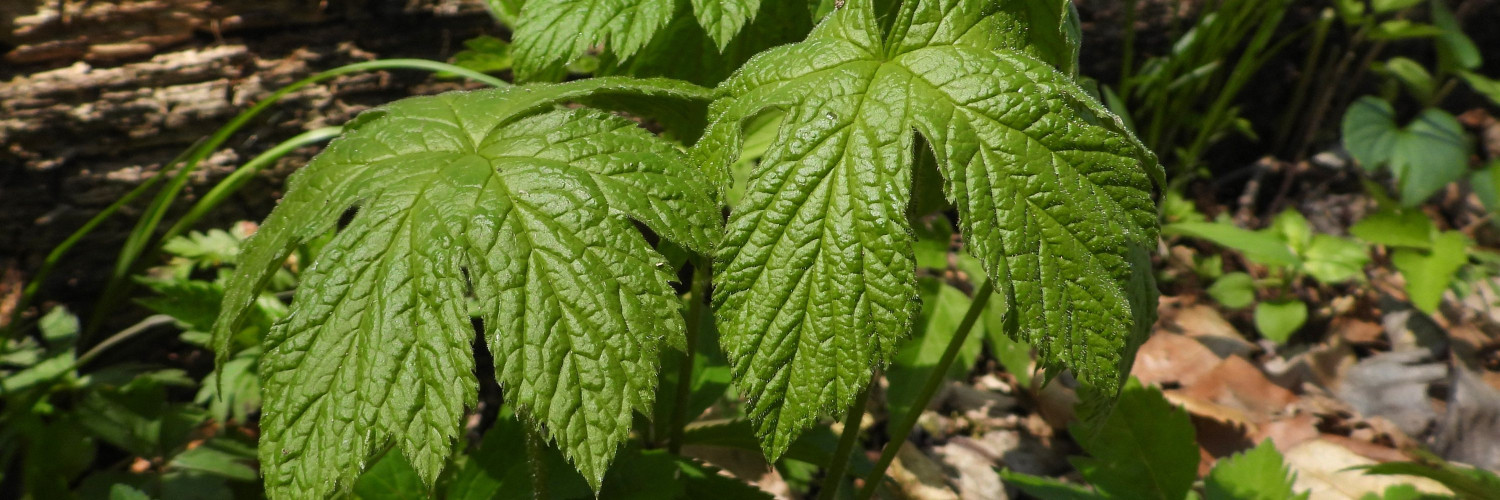
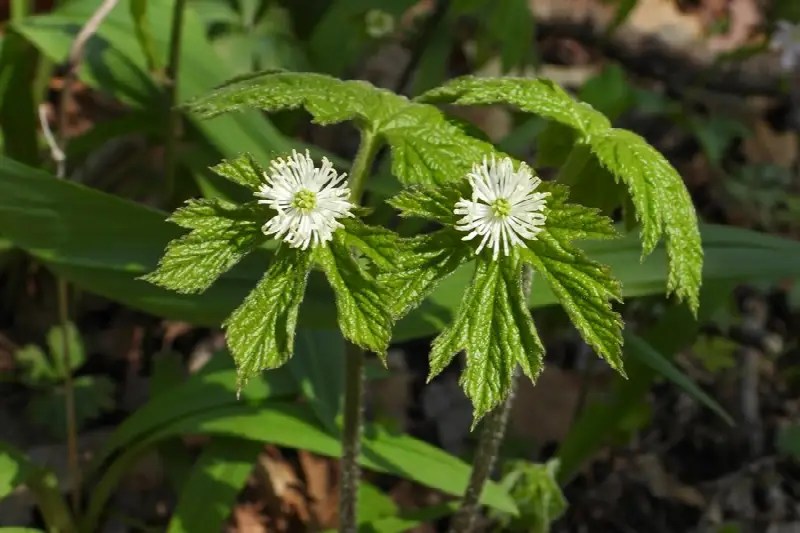
Goldenseal is a low perennial of the buttercup family, rarely more than 30 cm tall. A mature plant carries two palmate, deeply veined leaves that look rather like maple leaves, and in spring it produces a single small flower with no petals at all — just a cluster of white stamens, easy to miss. The flower gives way to a raspberry-like cluster of red berries, which are not eaten. The plant's real distinction is underground: a knotted, bright yellow rhizome, and it is that colour — pure berberine — that gave the plant every one of its common names.
Chemical Composition
Goldenseal root contains a distinctive pair of isoquinoline alkaloids: berberine, the vivid yellow compound it shares with barberry and Oregon grape, and hydrastine, which is far more specific to this plant and largely defines it. Smaller amounts of canadine (tetrahydroberberine) and related alkaloids are also present, alongside flavonoids. The two principal alkaloids behave quite differently in the body — a distinction that matters greatly for the safety discussion below. Our glycerite is a full-spectrum extract of certified organic root in flaxseed vegetable glycerin.
Habitat
Goldenseal is native to the rich, shaded deciduous forests of eastern North America, from Vermont and Ontario south to Georgia and west to Arkansas. It is fussy: it wants deep shade, moist but well-drained humus-rich soil, and mature forest cover. It spreads slowly by rhizome and forms scattered colonies, and it takes several years to reach harvestable size. That slow biology, combined with a long history of commercial demand, is why the wild plant is classed as vulnerable on the IUCN Red List and listed in Appendix II of CITES.3
Taste
Intensely, memorably bitter — berberine and hydrastine together make goldenseal one of the most bitter roots in the North American repertoire, with a distinct acrid edge. It is not a pleasant-tasting herb and has never pretended to be. A glycerin base takes the edge off, but the bitterness remains unmistakable.
History of Use
Goldenseal was used by Indigenous peoples of eastern North America — the Cherokee and Iroquois among them — both as a medicinal root and as a brilliant yellow dye for cloth and quills. European settlers adopted it rapidly, and by the nineteenth century it had become one of the flagship botanicals of the Eclectic physicians in the United States, who regarded it as a principal bitter tonic for the mucous membranes. That popularity was precisely its undoing: commercial demand drove more than a century of wild harvesting, and the plant has never fully recovered.
Goldenseal Root (Hydrastis canadensis) Glycerite — Traditional Uses:
- Classic Bitter Tonic
- Traditional Mucous-Membrane Herb
- Berberine and Hydrastine Content
- Short-Course Traditional Use
Alcohol-free and made with organic flaxseed glycerin. Please read the interaction and sourcing notes below before use.
Goldenseal and Prescription Medicines
Goldenseal is a genuinely active plant, and there is one useful thing to know before using it — not because it is unsafe in itself, but because it can affect how the body handles some other medicines.
In a randomized crossover study, twelve healthy adults took 900 mg of goldenseal root extract three times daily for 28 days. Their activity of two major drug-metabolising enzymes — CYP3A4/5 and CYP2D6 — fell by around 40%, while two other enzymes (CYP1A2 and CYP2E1) were unaffected.1
Why this matters: those two enzymes between them handle a very large share of commonly prescribed medicines. Slowing them down can raise drug levels in the blood — the same idea as the familiar grapefruit-juice note. Both of goldenseal's main alkaloids contribute, with hydrastine the more potent inhibitor of CYP3A4 and berberine the more potent for CYP2D6.2
The practical takeaway is simple: if you take prescription medication, have a quick word with your doctor or pharmacist before using goldenseal. If you don't, this is not something to worry about — it is just the sensible check that keeps goldenseal a considered, short-course herb rather than an everyday one.
The Bitter Tonic Tradition
Set aside the more extravagant modern claims and what remains is a classic bitter root. Goldenseal's traditional standing rested on its intense bitterness and its use in small amounts and short courses — the Eclectic physicians valued it as a bitter tonic for the mucous membranes, and that is the frame in which it has the longest and steadiest record. Its alkaloid chemistry is genuinely well characterised; berberine in particular is among the most-studied plant alkaloids in the world.
A Note on the Evidence
Goldenseal is a plant surrounded by more folklore than evidence, and we would rather say so. The best-documented modern findings about it are, ironically, its drug interactions — that is where the rigorous human data sits. Claims that it works as a general-purpose remedy, or that it masks drug tests, are not supported. We offer goldenseal for what tradition actually supports: a potent bitter root with a well-characterised chemistry, for occasional short-course use by adults who are not taking interacting medication.
How to Use Goldenseal Root Glycerite
- Timing: Traditionally taken shortly before meals, as with other bitter tonics.
- Short courses: Traditional practice is a limited course rather than continuous daily use.
- Start modest: This is a potent, intensely bitter root — begin at the low end of the range.
- Storage: Keep in a cool, dry place away from direct sunlight.
Contraindications
- Prescription medication: If you take prescription medicine, check with your doctor or pharmacist first (see the section above).
- Pregnancy and breastfeeding: Not recommended, as with other berberine-containing herbs.
- Infants and young children: Not for use.
- Liver or kidney conditions: Consult your healthcare provider before use.
- Duration: Not intended for continuous long-term use.
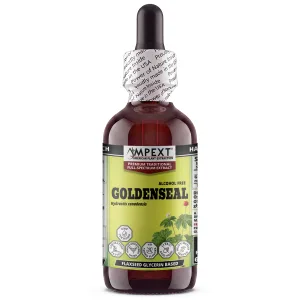
FROM THE AMPEXT RANGE
Goldenseal Root Glycerite (Hydrastis canadensis)
Alcohol-free · organic flaxseed glycerin · full-spectrum root extract · 2 oz
References
- In vivo effects of goldenseal, kava kava, black cohosh, and valerian on human cytochrome P450 1A2, 2D6, 2E1, and 3A4 phenotypes. Clinical Pharmacology & Therapeutics, 2005.
- Human cytochrome P450 inhibition and metabolic-intermediate complex formation by goldenseal extract and its methylenedioxyphenyl components. Drug Metabolism and Disposition, 2003.
- Identification of goldenseal (Hydrastis canadensis L.) habitat and indicators in Pennsylvania, USA: the influence of climate and site on in situ conservation of an edge of range plant species. Ecology and Evolution, 2025.
These statements have not been evaluated by the Food and Drug Administration. This product is not intended to diagnose, treat, cure or prevent any disease. The information in this article is provided for educational purposes only and is not medical advice; consult a qualified healthcare provider before starting any new supplement, especially if you are pregnant, nursing, taking medication, or have an underlying health condition.
Related Products
Leave a comment