


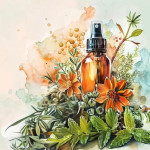
















Wild cherry bark comes from the black cherry tree (Prunus serotina), a tall forest tree of eastern North America — and for well over a century its aromatic bark was the classic base of old-fashioned cough syrups. Behind its distinctive cherry-almond scent sits a small piece of botanical chemistry that is well worth understanding — and that explains why the bark has always been enjoyed in modest amounts. This article covers what the bark is and contains, its long place in American herbal history, and a clear account of both.
Botanical Characteristics
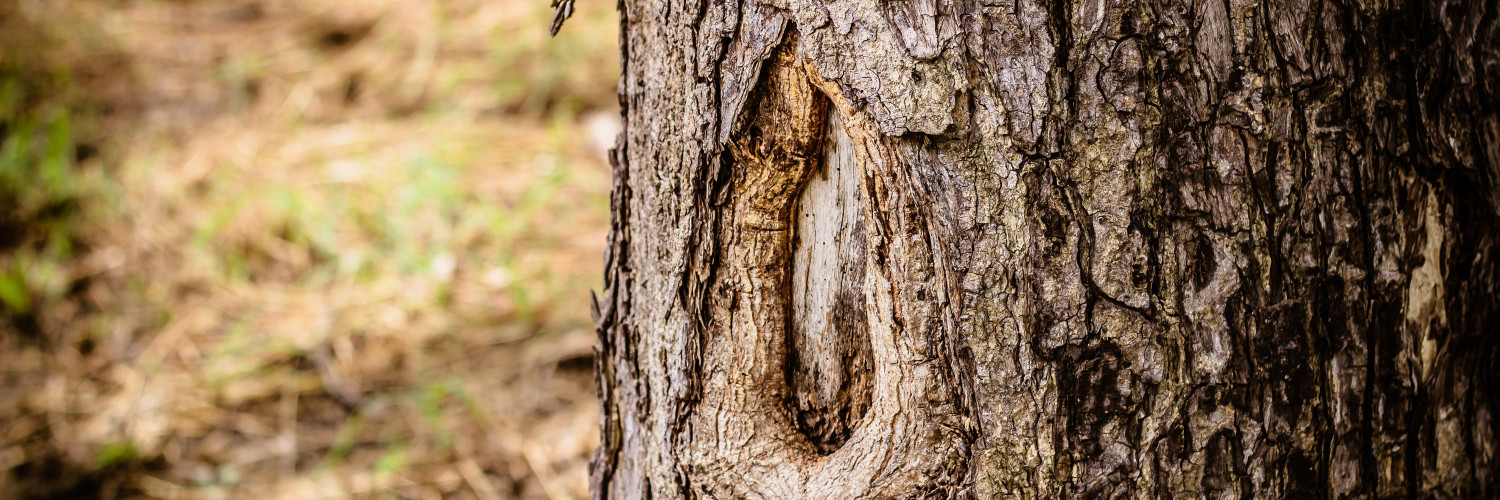
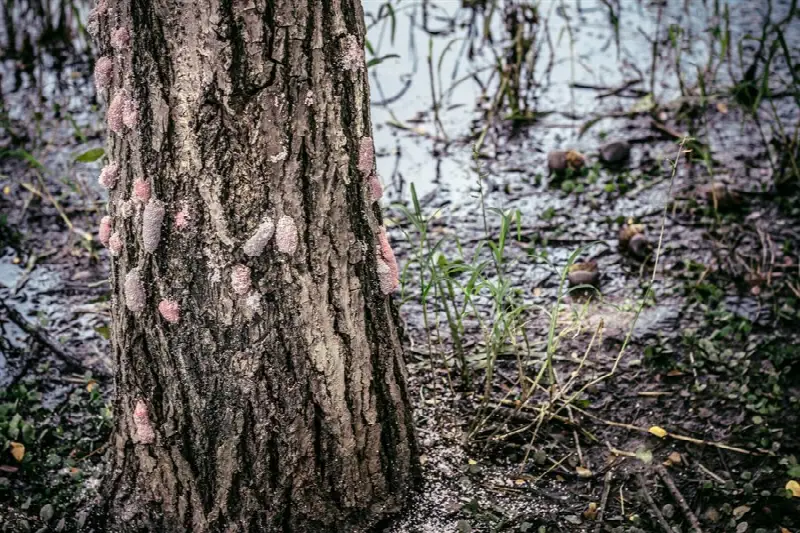
Black cherry is a large deciduous tree, reaching 20–25 metres at maturity, with glossy, finely toothed, lance-shaped leaves. In late spring it carries long, drooping cylindrical clusters (racemes) of small white flowers, followed by pea-sized cherries that ripen from red to near-black. Its bark is a field mark in itself: smooth and marked with pale horizontal lenticels when young, then breaking on older trunks into distinctive dark, scaly plates often likened to burnt cornflakes. The inner bark is what is used, and it carries a characteristic almond-like aroma when fresh.
Chemical Composition
The defining compound of wild cherry is prunasin, a cyanogenic glycoside — and it is worth being precise about where it sits, because this is a common point of confusion. The famous cyanogenic glycoside amygdalin is concentrated in the seeds (the stones) of cherries and other stone fruit. Prunasin is a closely related but simpler molecule — essentially amygdalin with one fewer sugar — and it is distributed instead through the tree's vegetative tissues; in this plant family it is documented across all plant organs, and has been measured directly in the woody parts of Prunus serotina.1 So it is prunasin, not the seed's amygdalin, that gives the bark its character. When the bark tissue is broken, prunasin is split by prunasin hydrolase and mandelonitrile lyase into glucose, benzaldehyde and a small amount of hydrogen cyanide.2 Benzaldehyde is what you smell — the warm cherry-almond aroma — while the cyanogenic potential is the reason for the cautions below. Alongside prunasin the bark also carries tannins, cerebrosides and polyphenols.3 Our glycerite is a full-spectrum extract of certified organic bark in flaxseed vegetable glycerin.
Habitat
Black cherry is native across eastern North America, from Canada to the Gulf and into Mexico and Central America, and is one of the most widespread cherries on the continent. It is a pioneer of forest edges, clearings and old fields, growing quickly in disturbed ground, and is also a prized hardwood timber tree valued for its rich reddish wood. Its fruit is an important food for birds and mammals, which spread its seed widely.
Taste
Warm, aromatic and distinctly cherry-almond, with an underlying bitterness and astringency — the almond note is the benzaldehyde. It is one of the more recognisable herbal flavours, and the reason wild cherry was historically taken as a pleasant-tasting syrup. In a glycerin base the aroma is carried while the bitterness is softened.
History of Use
Wild cherry bark has one of the most consistent traditional records of any North American tree. Indigenous peoples across its range used the inner bark, and it was adopted so thoroughly into nineteenth- and early-twentieth-century American practice that it became the standard flavouring and base of commercial cough preparations — its cherry taste is the ancestor of the "cherry" flavour still associated with cough medicines today. In Mexican and Central American tradition the leaves and fruit have their own long history of use. Across all of it the bark is valued as a soothing, aromatic respiratory herb.
Wild Cherry Bark (Prunus serotina) Glycerite — Traditional Uses:
- Classic Soothing Respiratory Herb
- The Original "Cherry" of Cough Syrups
- Aromatic, Benzaldehyde-Rich Bark
- Short-Course Traditional Use
Alcohol-free and made with organic flaxseed glycerin. Please read the cyanogenic-glycoside note below before use.
The Aroma Tells the Chemistry
Wild cherry is an unusually good example of chemistry you can smell. That warm cherry-almond scent is not an added flavour — it is benzaldehyde, released when the bark's prunasin is broken down.2 That very reaction is the reason wild cherry has always been enjoyed in modest amounts rather than by the spoonful — the same easy, sensible restraint you would give any plant in the cherry family.
Using Wild Cherry Bark Sensibly
Wild cherry bark has a long, unremarkable safety record — it was the everyday base of household cough syrups for generations and remains a pleasant, aromatic bark today. Like the cherry family in general, it is one to take in modest amounts rather than by the spoonful; using it in small quantities, for short periods, is simply the sensible way to enjoy an aromatic bark of this kind. The one clear rule is that it is not for use during pregnancy or breastfeeding, or by infants and young children.
A Note on the Evidence
Wild cherry bark has a deep and consistent traditional record and a well-understood chemistry, but it has not been the subject of a body of modern randomized controlled trials, so we make no medical claims for it. We offer it as what it has always been: a classic, aromatic, soothing bark of North American tradition — used, as it always has been, in modest amounts and short courses.
How to Use Wild Cherry Bark Glycerite
- Modest amounts: Use at the low end of the range — this is a cyanogenic plant traditionally taken in small quantities.
- Short courses: Traditional use is occasional and short-term rather than continuous.
- How to take it: Alcohol-free; take in a little water. Its cherry-almond aroma is part of its character.
- Storage: Keep in a cool, dry place away from direct sunlight.
Contraindications
- Pregnancy and breastfeeding: Not recommended.
- Infants and young children: Not for use.
- Amounts: best taken in modest amounts and for short periods rather than continuously.
- Medications and health conditions: If you take prescription medication or have an underlying health condition, consult your doctor before use.
FROM THE AMPEXT RANGE
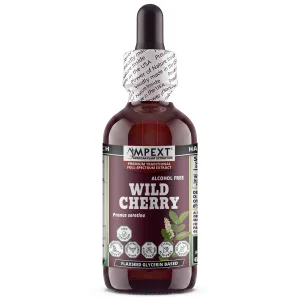
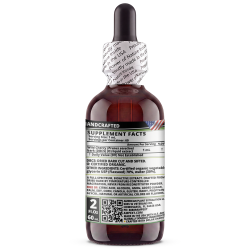
Wild Cherry Bark Glycerite (Prunus serotina)
Alcohol-free · organic flaxseed glycerin · full-spectrum bark extract · 2 oz
References
- Seasonal changes affect root prunasin concentration in Prunus serotina and override species interactions between P. serotina and Quercus petraea. Journal of Chemical Ecology, 2016.
- Investigation of the microheterogeneity and aglycone specificity-conferring residues of black cherry prunasin hydrolases. Plant Physiology, 2002.
- Phytopharmacological possibilities of bird cherry Prunus padus L. and Prunus serotina L. species and their bioactive phytochemicals. Nutrients, 2020.
These statements have not been evaluated by the Food and Drug Administration. This product is not intended to diagnose, treat, cure or prevent any disease. The information in this article is provided for educational purposes only and is not medical advice; consult a qualified healthcare provider before starting any new supplement, especially if you are pregnant, nursing, taking medication, or have an underlying health condition.
Related Products
Leave a comment