






















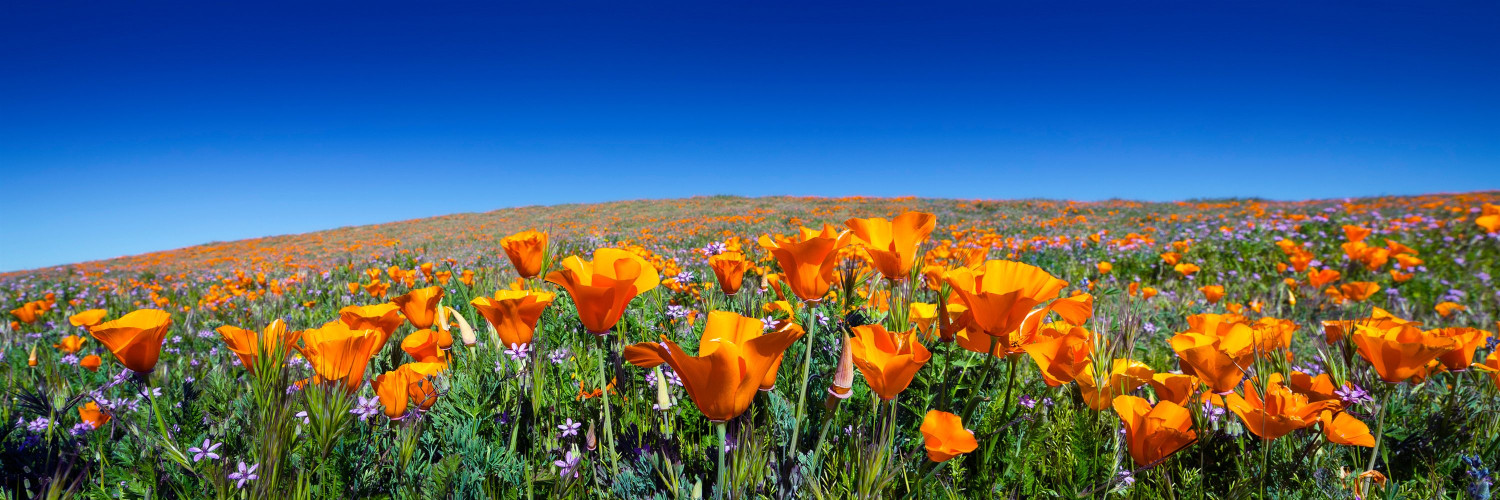
The California poppy (Eschscholzia californica) is the flower that turns whole hillsides orange after a wet winter — and, less obviously, a long-standing herb of the American West. It is a true poppy relative but not an opium poppy: it contains none of the compounds that make its notorious cousin what it is. Instead it carries its own family of gentle alkaloids, and a traditional reputation for settling the mind at the end of the day. This article looks at what the plant actually contains, what the laboratory work shows, and where the evidence genuinely stops.
Botanical Characteristics
California poppy is a low, spreading annual or short-lived perennial with finely divided, blue-green, almost feathery foliage. Its flowers are four silky petals — most often vivid orange, sometimes yellow or cream — carried on slender stems above the leaves. They have a distinctive habit: opening in full sun and closing in the evening, in cloudy weather and at night. The seed pods are long and narrow, splitting explosively when ripe to scatter seed.
Chemical Composition
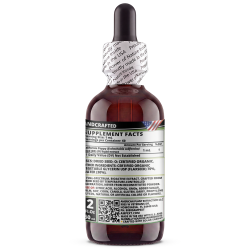
The plant's characteristic constituents are isoquinoline alkaloids — chiefly californidine, escholtzine and protopine, alongside smaller quantities of reticuline and related compounds. Crucially, it contains no morphine or codeine: despite being in the poppy family, its alkaloid profile is entirely different from Papaver somniferum. Analytical work on commercial preparations found californidine, escholtzine and protopine are all absorbed across an intestinal cell model, with escholtzine and protopine highly permeable, apparently via active transport rather than simple diffusion.1 Our glycerite is a full-spectrum extract of certified organic seed in flaxseed vegetable glycerin.
Habitat
Native to California and the adjacent western United States and Mexico, the plant is adapted to a Mediterranean climate of wet winters and long dry summers. It thrives on poor, sandy, well-drained ground — grassland, roadsides and open hillsides — and after a rainy season it produces the mass blooms, or "superblooms," that draw visitors to the Antelope Valley and Carrizo Plain. It has been the official state flower of California since 1903.
Taste
California poppy is mildly bitter with a soft, faintly earthy character — noticeably gentler than many alkaloid-bearing plants. In a glycerin base that bitterness is rounded out and the extract takes on a light sweetness.
History of Use
Indigenous peoples of California — among them the Costanoan, Pomo and Mendocino groups — used the plant long before European settlement, and its traditional applications centred on calming and settling: helping restless children sleep, and easing tension. Spanish colonial and later Anglo-American herbalists adopted it for similar purposes, and by the late nineteenth century it had entered the European materia medica, where it remains a common ingredient of evening and calming preparations, particularly in France and Germany.
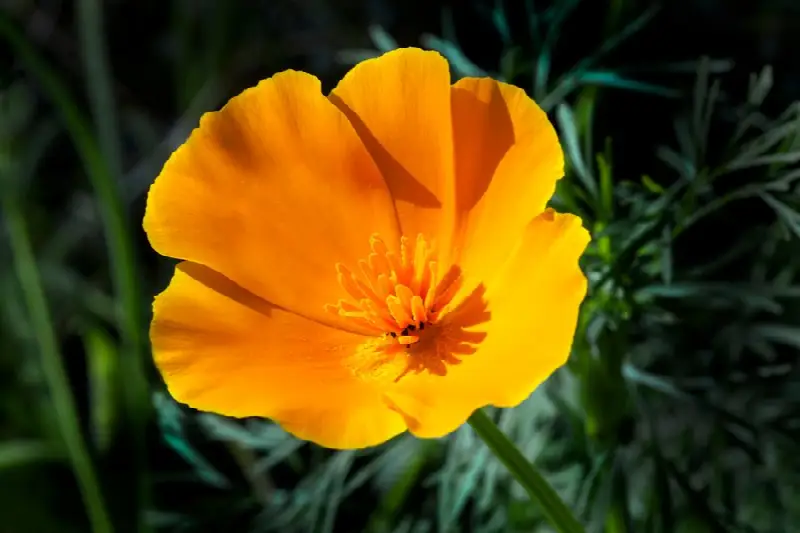
California Poppy Seed (Eschscholzia californica) Glycerite — Traditional Uses:
- Calm, Settled Mood
- Restful Evenings
- Everyday Tension Relief
- Gentle, Non-Habit-Forming Character
Alcohol-free and made with organic flaxseed glycerin — a mild option for an evening routine.
California Poppy and a Calm, Settled State
The most interesting modern work on this plant concerns how its alkaloids interact with GABAA receptors — the main inhibitory, calming receptors of the nervous system. The picture that has emerged is more nuanced than popular accounts suggest, and it is worth stating accurately.
In electrophysiological studies on recombinant GABAA receptors, (S)-reticuline acted as a positive allosteric modulator at the α3, α5 and α6 receptor subtypes — meaning it enhances GABA's calming signal rather than mimicking it. Several other alkaloids tested, including N-methyllaurotetanine and (R)-reticuline, showed no meaningful activity at the receptors examined.2 So the traditional calming reputation has a plausible molecular basis — but it appears to rest on particular compounds rather than the whole extract acting as one, and this is receptor-level laboratory work, not a clinical result.
Why Preparation Quality Matters Here
California poppy is a good example of why the details of a botanical extract are not marketing fluff. When researchers measured the three main alkaloids across eight commercial products, they found enormous variation: californidine ranged roughly twenty-fold between products, escholtzine thirteen-fold and protopine twenty-five-fold.1 Two bottles bearing the same name on the shelf can therefore differ substantially in what they actually contain. It is a reminder to buy from makers who can tell you what is in the bottle and how it was made — and, frankly, a good argument for full-spectrum extraction from properly identified plant material rather than reconstituted powder.
A Note on the Evidence
California poppy has a long and well-documented traditional record and a credible receptor-level mechanism. What it does not yet have is a solid body of randomized controlled trials on its own — most clinical work has tested it inside multi-herb combinations, which makes it impossible to attribute any effect to the poppy alone. We therefore offer it as what the evidence supports: a gentle, traditional evening herb for helping maintain a calm, settled state — not a sleep medication, and not a treatment for any condition.
How to Use California Poppy Glycerite
- Timing: Traditionally an evening herb — most people take it after dinner or in the hour before bed.
- How to take it: Alcohol-free and mild; take directly or stir into water, tea or juice.
- Start modest: Begin at the low end of the range and adjust to what suits you.
- Storage: Keep in a cool, dry place away from direct sunlight.
Contraindications
- Drowsiness: This is a calming herb — take care with driving or operating machinery until you know how it affects you.
- Pregnancy and breastfeeding: Avoid during pregnancy; consult your healthcare provider before use while breastfeeding.
- Sedatives and other medication: If you take sedatives, sleep aids, or medication affecting the nervous system, consult your doctor before use — effects may add together.
- Drug testing: California poppy contains no morphine or codeine, but if you are subject to workplace testing and have any concern, discuss it with the testing provider in advance.
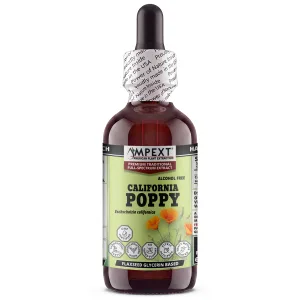
FROM THE AMPEXT RANGE
California Poppy Seed Glycerite (Eschscholzia californica)
Alcohol-free · organic flaxseed glycerin · full-spectrum extract · 2 oz
References
- Alkaloids in commercial preparations of California poppy — quantification, intestinal permeability and microbiota interactions. Biomedicine & Pharmacotherapy, 2023.
- Modulatory effects of Eschscholzia californica alkaloids on recombinant GABA-A receptors. Biochemistry Research International, 2015.
These statements have not been evaluated by the Food and Drug Administration. This product is not intended to diagnose, treat, cure or prevent any disease. The information in this article is provided for educational purposes only and is not medical advice; consult a qualified healthcare provider before starting any new supplement, especially if you are pregnant, nursing, taking medication, or have an underlying health condition.
Related Products
Leave a comment