





















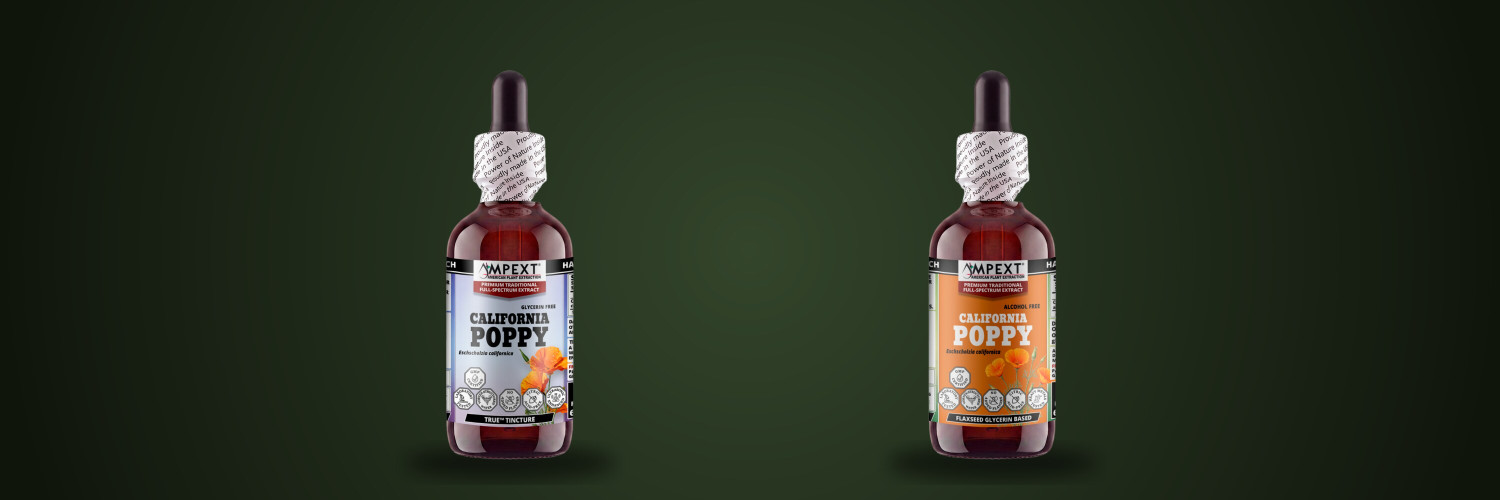
Walk through our catalog and you will meet the same plant twice: California poppy as an alcohol-based TRUE™ tincture, and California poppy as an alcohol-free glycerite. Same species, same care, two different liquids in the bottle — and a question we get more often than any other: which one should I choose? The honest answer is that neither form is "better"; they are two different solvents doing two different jobs. This article explains what each form actually is, what the extraction chemistry says, and how to pick the right one for you in about thirty seconds.
What a Tincture Is
A tincture is the classic of Western herbalism: plant material macerated in a mixture of ethanol and water. The alcohol is not there to preserve alone — it is the working solvent. Ethanol–water blends sit at an unusually useful point on the polarity scale, so they dissolve a wide window of plant compounds at once: water-loving constituents on one side and moderately oil-loving ones — resins, aromatic molecules, many alkaloids — on the other. The research literature is blunt about this: aqueous ethanol consistently out-extracts both pure water and pure alcohol for total phenolics and antioxidant activity.1
Alcohol also gives tinctures their legendary shelf life — a properly made hydroethanolic extract keeps for years — and the sharp, warming taste herbalists recognise on the tongue. Our TRUE™ line is exactly this tradition: full-spectrum maceration in certified organic cane alcohol, glycerin-free.
What a Glycerite Is
A glycerite swaps the ethanol for vegetable glycerin — a clear, naturally sweet, syrupy liquid. Ours is USP-grade, certified organic and pressed from flaxseed, blended with water at roughly 70/30. Glycerin is a food substance the FDA lists as generally recognized as safe,4 and it brings three practical gifts: no alcohol at all, a naturally smooth and lightly sweet taste that needs no added sugar, and gentleness on the palate that makes daily use genuinely pleasant.
For years glycerin was dismissed as the "weak" solvent — a compromise for people who could not take alcohol. The modern extraction literature has quietly rewritten that verdict: glycerol–water mixtures are now studied as serious green extraction solvents in their own right, with a growing body of work showing effective recovery of polyphenols from plant material.2
Same Plant, Different Pull
Here is the part most marketing skips: the two solvents do not extract the same things from the same herb. A recent head-to-head study on olive leaf ran water, aqueous ethanol and aqueous glycerol through identical extractions and measured what each actually captured. The result was not a winner and a loser — it was a split decision. Glycerol recovered more phenolic acids, stilbenes and secoiridoids; ethanol recovered more flavonols and phenylethanoids.3
Two honest conclusions follow. First, a tincture and a glycerite of the same plant are siblings, not twins — overlapping but not identical chemical profiles. Second, neither form can claim universal superiority: which is "stronger" depends on which family of compounds you ask about. Where ethanol keeps a real edge is breadth — for resin-heavy, intensely aromatic or strongly alkaloid botanicals, the wider solvent window of alcohol is hard to beat.1 Glycerin answers with polyphenol classes it happens to court particularly well3 — and with the fact that people actually enjoy taking it every day.
The 30-second version:
- Tincture — ethanol + water; widest extraction window; sharp classic taste; years of shelf life
- Glycerite — glycerin + water; alcohol-free; naturally sweet; a proven polyphenol solvent
- Same herb in both forms = siblings, not twins
- Neither is universally "stronger" — the chemistry splits by compound family
Everyday Practicalities
- Alcohol content. A typical tincture serving of 1 mL carries roughly as much alcohol as a bite of ripe fruit — trivial for most adults, but not zero. A glycerite carries none at all.
- Taste. Tinctures are sharp and warming; glycerites are smooth and lightly sweet with no added sugar. If taste is the reason a supplement gets abandoned by week two, that alone can decide the question.
- Mixing. Both go into water, juice or any drink. The glycerite disappears politely; the tincture announces itself.
- Shelf life. Alcohol is the better preservative: tinctures comfortably outlast glycerites. We date every bottle; store both cool, dark and tightly closed, and a glycerite is best finished within its stated best-by rather than kept as an heirloom.
Who Should Pick Which
Reach for the glycerite if you avoid alcohol for any reason — personal, cultural, faith-based, recovery or simple preference; if the extract is for someone sensitive to strong tastes; if you take servings several times a day and want them pleasant; or if the gentler, sweeter profile is what will actually keep you consistent.
Reach for the tincture if you want the classic, centuries-tested hydroethanolic tradition; if the botanical is resinous or intensely aromatic, where alcohol's wide solvent window earns its keep; or if you buy larger sizes and want maximum shelf stability. The trace of alcohol per serving is, for most adults, a non-issue.
Either way: our labels advise the same basics for both forms — adults, not during pregnancy or nursing, and professional advice before giving any extract to anyone under 18 or alongside prescription medication.
Why We Make Both
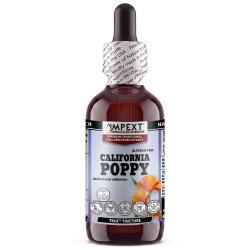
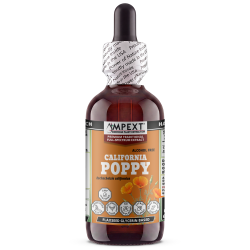
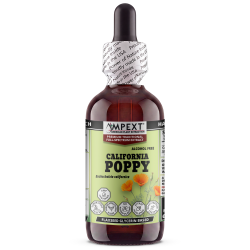
Because the choice belongs to you, not to us. Both lines are made the same way in the same Homosassa facility: whole botanicals, temperature-controlled maceration, never reconstituted powder, every incoming lot identity-tested on our own instruments, under a quality system independently certified by SGS to cGMP. The only variable we change is the solvent — certified organic cane alcohol on one line, certified organic flaxseed glycerin on the other. California poppy customers can even run their own comparison: the same plant, both forms, side by side on our shelf.
Browse Glycerites Browse Tinctures
A Note on the Evidence
The extraction chemistry above comes from laboratory studies of solvents and plant material, not from clinical trials comparing how the two forms perform in people — those trials largely do not exist, and we will not pretend otherwise. What the chemistry does establish is that both solvents genuinely extract, that their profiles differ by compound family, and that the old habit of dismissing glycerites as "weak tinctures" is not supported by the current literature. Form is a matter of fit, not of faith.
References
- Effect of Extraction Solvent/Technique on the Antioxidant Activity of Selected Medicinal Plant Extracts. Molecules, 2009.
- Glycerol and Glycerol-Based Deep Eutectic Mixtures as Emerging Green Solvents for Polyphenol Extraction: The Evidence So Far. Molecules, 2020.
- Comparative Analysis of Sustainable Extraction Methods and Green Solvents for Olive Leaf Extracts with Antioxidant and Antihyperglycemic Activities. Antioxidants, 2024.
- 21 CFR §182.1320 — Glycerin, generally recognized as safe. U.S. Code of Federal Regulations.
These statements have not been evaluated by the Food and Drug Administration. These products are not intended to diagnose, treat, cure or prevent any disease. The information in this article is provided for educational purposes only and is not medical advice; consult a qualified healthcare provider before starting any new supplement, especially if you are pregnant, nursing, taking medication, or have an underlying health condition.
Related Products
Leave a comment