


















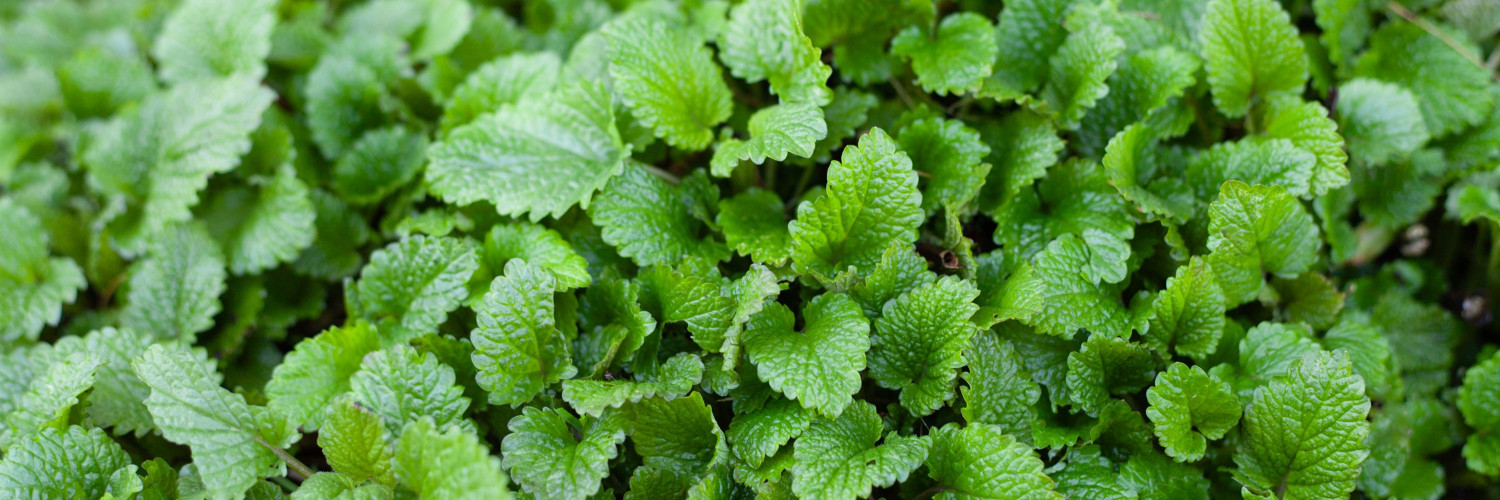
Lemon Balm (Melissa officinalis) is the herb European gardeners have grown for calm for the better part of a thousand years. Crush a leaf and you get a clean lemon-and-mint scent; steep it and you get one of the gentlest herbal traditions in the Western materia medica. It is also one of the few calming herbs with a genuine body of modern human research behind it — including a controlled sleep trial and studies on mood in healthy adults. This article looks at what is inside the leaf, how it has been used, and what that research actually shows.
Botanical Characteristics
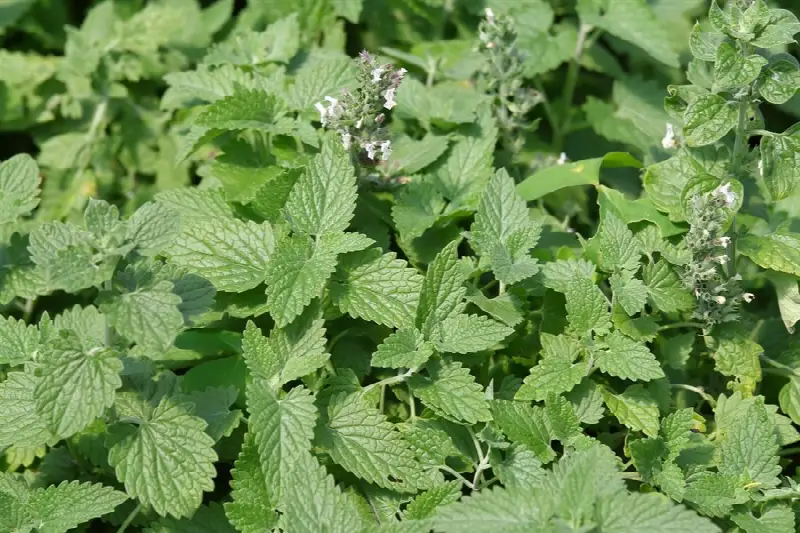
Lemon Balm is a soft-stemmed perennial of the mint family (Lamiaceae), growing to about 60–90 cm. Its leaves are heart-shaped, deeply veined and crinkled, with scalloped edges and a slightly hairy surface — bright green and unmistakably lemon-scented when bruised. In midsummer it carries small, inconspicuous white or pale-yellow flowers that honeybees find irresistible, which is exactly how the plant earned its name: Melissa is Greek for honeybee.
Chemical Composition
The leaf's signature compound is rosmarinic acid, a polyphenol that is both the plant's main antioxidant and the molecule most often credited with its calming character. Alongside it sit pentacyclic triterpenoids — ursolic and oleanolic acid — and a delicate volatile oil rich in citral (geranial and neral), citronellal and geraniol, which give the leaf its lemon aroma. Laboratory work indicates that rosmarinic acid and these triterpenoids slow the breakdown of GABA, the nervous system's principal calming neurotransmitter — a plausible mechanism for the plant's traditional reputation.4 Our glycerite is a full-spectrum extract of certified organic dried leaf in flaxseed vegetable glycerin, so these water- and glycerin-soluble compounds are captured in the ratios the plant made them in.
Habitat
Native to the southern Mediterranean, the Balkans and western Asia, Lemon Balm spread across Europe with monastery gardens and naturalised widely — it now grows readily in temperate gardens worldwide. It is famously easy: it tolerates poor soil, partial shade and neglect, and self-seeds enthusiastically enough that gardeners often plant it in containers.
Taste
Fresh Lemon Balm is bright, lemony and faintly sweet, with a soft minty finish and none of the sharpness of true citrus. In a glycerin-based extract that gentleness is preserved and rounded out — naturally lightly sweet, with no alcohol bite. It is one of the easiest herbal extracts to take without disguising.
History of Use
Lemon Balm has one of the longest continuous records of any Western calming herb. It appears in Greek and Roman writing, and Arab physicians of the 10th and 11th centuries recommended it for lifting the spirits. In medieval and Renaissance Europe it became a monastery-garden staple: the 16th-century Swiss physician Paracelsus called it the "elixir of life," and it formed the base of Carmelite water, a preparation made by French Carmelite nuns from 1611 and still sold in Europe today. Across all of it the theme is remarkably consistent — a herb for settling the mind, easing tension, and comforting the stomach.
Lemon Balm (Melissa officinalis) Glycerite Benefits:
- Calm, Relaxed Mood
- Restful Evenings
- Everyday Digestive Comfort
- Antioxidant Support
Alcohol-free and made with organic flaxseed glycerin — a gentle option for anyone who would rather avoid a tincture base.
Lemon Balm and a Calm, Relaxed Mood
Lemon Balm is unusual among calming herbs in having been tested on ordinary healthy people rather than only in patients. In two randomized, double-blind, placebo-controlled crossover studies, healthy young adults took lemon balm extract in a drink and in yoghurt. A 0.3 g dose significantly reduced self-rated anxiety at both one and three hours afterwards, and all active doses lowered salivary cortisol — a physiological stress marker — an hour after intake.1
An earlier randomized crossover trial in twenty healthy volunteers found the same shape of effect and added a genuinely practical detail: the lowest dose (300 mg) raised self-rated calmness, while the 600 mg dose improved accuracy on a sustained-attention task — but the highest dose (900 mg) noticeably reduced alertness.2 The takeaway is worth stating plainly: with Lemon Balm, more is not better. A modest amount supports a composed, settled state; overshooting simply makes you drowsy.
Lemon Balm and Restful Evenings
The most rigorous recent work looked at sleep. In a prospective, double-blind, placebo-controlled crossover study, thirty adults who woke unrefreshed took 400 mg of a Lemon Balm preparation half an hour before bed for two weeks. Insomnia Severity Index scores fell significantly against placebo (6.8 versus 9.7), slow-wave sleep — the deep, physically restorative stage — increased by roughly 15%, and 87% of participants reported better sleep quality compared with 30% on placebo. No adverse effects were recorded.3
This fits the traditional picture neatly. Lemon Balm is not a sedative that knocks you out; it is a herb that helps the evening wind down, which is why European tradition has always placed it in the evening cup.
Lemon Balm and Digestive Comfort
Lemon Balm belongs to the classic group of carminative herbs — aromatic plants of the mint family traditionally taken after meals to settle the stomach. That use is centuries old and consistent across European herbals, and the leaf's volatile oil, with its citral and citronellal, is the same class of compound that gives peppermint and fennel their reputation. Modern clinical work here is thinner than for mood and sleep, and much of it tests Lemon Balm inside multi-herb formulas rather than on its own, so we present digestive comfort as what it is: a well-documented traditional use that the plant's chemistry makes entirely plausible.
A Note on the Evidence
Lemon Balm has a better human evidence base than most calming herbs — real randomized, placebo-controlled trials in healthy people, not just laboratory work. A 2025 review of that literature is nonetheless measured: the trials are small, extract preparations and doses vary between studies, and outcomes often rest on self-report, so the authors call for larger multicentre trials before firm conclusions.4 We offer Lemon Balm for what that supports — a long-trusted garden herb that helps maintain a calm, relaxed mood and a restful evening as part of a daily routine.
How to Use Lemon Balm Glycerite
- Timing: Traditionally an evening herb — many people take it after dinner or an hour before bed. It can equally be used during the day when a settled, composed state is what you are after.
- Start modest: The research above is a good practical guide — a smaller amount supports calm focus, while a much larger one mainly makes you sleepy. Begin at the low end and adjust.
- How to take it: Alcohol-free and naturally lightly sweet, so it can be taken directly or stirred into water, tea or juice.
- Consistency: The sleep trial ran two weeks of nightly use; treat it as a routine rather than a one-off.
- Storage: Keep in a cool, dry place away from direct sunlight.
Contraindications
- Drowsiness: Lemon Balm can be relaxing — take care with driving or operating machinery until you know how it affects you, particularly at higher amounts.
- Pregnancy and breastfeeding: Consult your healthcare provider before use.
- Thyroid medication: If you take thyroid medication, consult your doctor before using Lemon Balm.
- Sedatives and other medication: If you take sedatives, sleep aids or other prescription medication, consult your doctor before adding this extract to your routine.
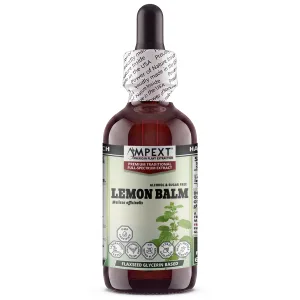
FROM THE AMPEXT RANGE
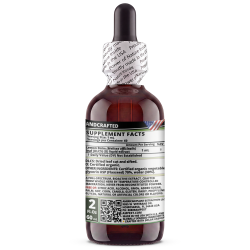
Lemon Balm Glycerite (Melissa officinalis)
Alcohol-free · organic flaxseed glycerin · full-spectrum whole-leaf extract · 2 oz
References
- Anti-stress effects of lemon balm-containing foods. Nutrients, 2014.
- Modulation of mood and cognitive performance following acute administration of Melissa officinalis (lemon balm). Pharmacology Biochemistry and Behavior, 2002.
- Effects of Melissa officinalis Phytosome on sleep quality: results of a prospective, double-blind, placebo-controlled, cross-over study. Nutrients, 2024.
- Unraveling the effects of Melissa officinalis L. on cognition and sleep quality: a narrative review. International Journal of Molecular Sciences, 2025.
These statements have not been evaluated by the Food and Drug Administration. This product is not intended to diagnose, treat, cure or prevent any disease. The information in this article is provided for educational purposes only and is not medical advice; consult a qualified healthcare provider before starting any new supplement, especially if you are pregnant, nursing, taking medication, or have an underlying health condition.
Related Products
Leave a comment