




















Lomatium (Lomatium dissectum) — fernleaf biscuitroot — is one of the great medicinal roots of the North American West, and one of the least familiar outside it. For the Indigenous peoples of the Intermountain West it was a first-rank plant, important enough that some called it simply "the great medicine." This article looks at what the root actually is and contains, its deep traditional record, and — because this is a plant that genuinely warrants it — a clear-eyed account of both the evidence and the cautions.
Botanical Characteristics
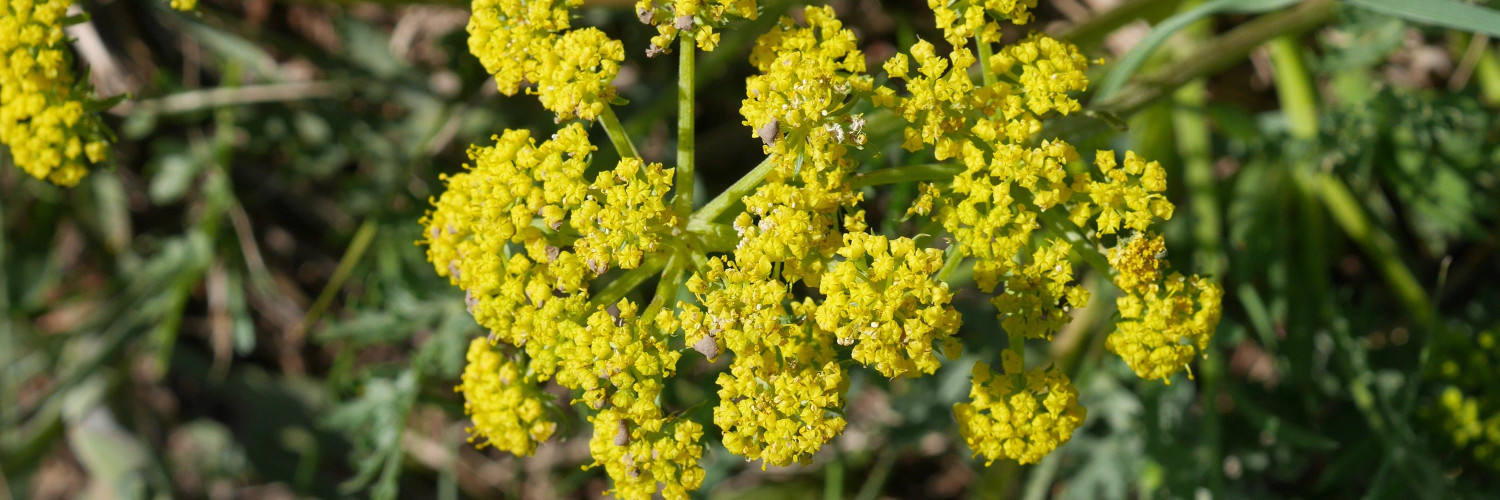
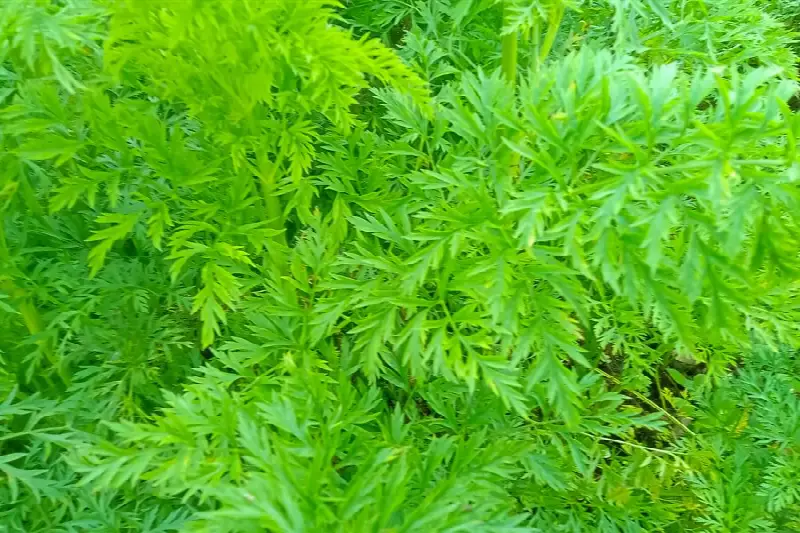
Lomatium is a stout perennial of the carrot and parsley family (Apiaceae), growing from a large, deep, woody taproot that is the part used. Above ground it forms a low mound of finely divided, fern-like blue-green foliage, and in spring sends up flat-topped umbels of small flowers — usually yellow in this species, occasionally purplish — on stout hollow stalks. The whole plant has the aromatic, resinous character typical of its family, and the massive root can descend a metre or more into rocky ground.
Chemical Composition
Lomatium's chemistry is dominated by two families of compounds. The first is its coumarins: chemical study of the root isolated a flavonoid and three coumarin glycosides, two of them previously unknown to science, one carrying the unusual sugar apiose.1 The second is the aromatic resin — analysis of Lomatium dissectum essential oil found it dominated by octyl acetate and decyl acetate, giving the root its distinctive scent.2 The root also contains tetronic acids, the compounds responsible for the plant's traditional use as a fish poison (see history, below). Our glycerite is a full-spectrum extract of certified organic root in flaxseed vegetable glycerin.
Habitat
Lomatium is native to the Intermountain West of North America — the dry, rocky, open country of the Great Basin and the inland Northwest, from British Columbia south through Idaho, Oregon, Nevada and into California, east to the Rockies. It favours sagebrush steppe, rocky slopes and well-drained volcanic soils, sending its deep taproot down to reach moisture that shallower-rooted plants cannot. It is slow-growing and slow to establish from seed, requiring a long cold winter to break dormancy.
Taste
Strongly aromatic and resinous, with a warm, balsamic, faintly bitter character — unmistakably a member of the aromatic carrot family, but more pungent and resinous than most. It is a distinctive rather than a delicate flavour; a glycerin base softens the resinous edge while keeping the aromatic warmth.
History of Use
Few North American plants were held in higher regard. Numerous peoples of the Pacific Northwest and Great Basin — including the Gosiute, who called it pia-a-na-tsu, "great medicine" — used both the root and the young shoots as food and the root as a principal medicine.2 The starchy roots of biscuitroot species were an important food staple, dried and ground into meal or baked into cakes — the origin of the common name. The same root's resin had a second, very different use: pounded and thrown into pools, it was used to stun fish for easy harvest, an effect later traced to its tetronic-acid content.1 The plant entered wider herbal awareness in the early twentieth century, after it was noted for use during the 1917–18 influenza pandemic in the American West.
Lomatium Root (Lomatium dissectum) Glycerite — Traditional Uses:
- Respected Traditional Root of the West
- Resinous, Aromatic Character
- Coumarin and Resin Content
- Short-Course Traditional Use
Alcohol-free and made with organic flaxseed glycerin. Please read the tolerance note below before use.
A Genuinely Interesting Chemistry
What makes Lomatium scientifically interesting is that its chemistry is both distinctive and still being mapped. The discovery of previously unreported coumarin glycosides — including one bearing a sugar rarely seen in coumarins at all — tells you this is not a thoroughly catalogued plant like chamomile or peppermint, but one where laboratory work is still turning up new compounds.1 Its essential-oil profile, dominated by octyl and decyl acetate rather than the terpenes typical of the family, is similarly unusual and is now used to help distinguish it chemically from its many relatives.2 For a plant this important in tradition, that ongoing chemical characterisation is exactly the kind of groundwork that matters.
A Note on the Evidence — and One Sensible Caution
Lomatium has a deep and serious traditional record and a distinctive, still-emerging chemistry. What it does not have is a body of modern randomized controlled trials, so we make no claims about what it does in the body — we present it as one of the most respected traditional roots of the North American West, and leave it there.
One caution deserves particular emphasis, because it is specific and well-documented: Lomatium can occasionally cause a temporary skin rash in some people. It is not dangerous and clears once use is stopped — a known, plant-specific quirk rather than a cause for alarm. If a rash develops, stop use. This is a further reason Lomatium has traditionally been used cautiously and in short courses rather than continuously.
How to Use Lomatium Root Glycerite
- Start low: Begin with a small amount to assess your individual tolerance before using more — see the rash note above.
- Short courses: Traditional use is a limited course rather than continuous daily use.
- How to take it: Alcohol-free; take in a little water. The root is strongly aromatic and resinous.
- Storage: Keep in a cool, dry place away from direct sunlight.
Contraindications
- Skin rash: Discontinue immediately if a rash develops — this is a known, plant-specific reaction to Lomatium. Start with a small amount to check tolerance.
- Pregnancy and breastfeeding: Avoid during pregnancy; consult your healthcare provider before use while breastfeeding.
- Medications: Coumarin-containing plants may interact with anticoagulant (blood-thinning) medication — if you take any prescription medication, consult your doctor before use.
- Duration: Not intended for continuous long-term use.
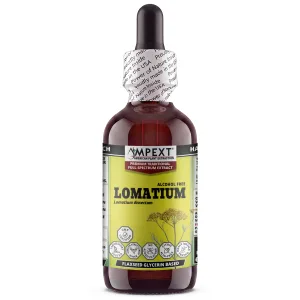
FROM THE AMPEXT RANGE
Lomatium Root Glycerite (Lomatium dissectum)
Alcohol-free · organic flaxseed glycerin · full-spectrum root extract · 2 oz
References
- Native American food and medicinal plants, 8. Water-soluble constituents of Lomatium dissectum. Journal of Natural Products, 1988.
- Lomatium species of the Intermountain Western United States: a chemotaxonomic investigation based on essential oil compositions. Plants (Basel), 2025.
These statements have not been evaluated by the Food and Drug Administration. This product is not intended to diagnose, treat, cure or prevent any disease. The information in this article is provided for educational purposes only and is not medical advice; consult a qualified healthcare provider before starting any new supplement, especially if you are pregnant, nursing, taking medication, or have an underlying health condition.
Related Products
Leave a comment