

















Mullein (Verbascum thapsus) is the tall, silver-leaved plant you have almost certainly walked past — on roadsides, railway banks and neglected ground across Europe and North America. Its soft, felted leaves and towering yellow flower spike make it unmistakable, and it carries one of the most consistent traditional records in Western herbalism. This article looks at what is actually in the leaf, why herbalists across several continents reached for the same plant, and — just as importantly — where the modern research does and does not yet go.
Botanical Characteristics
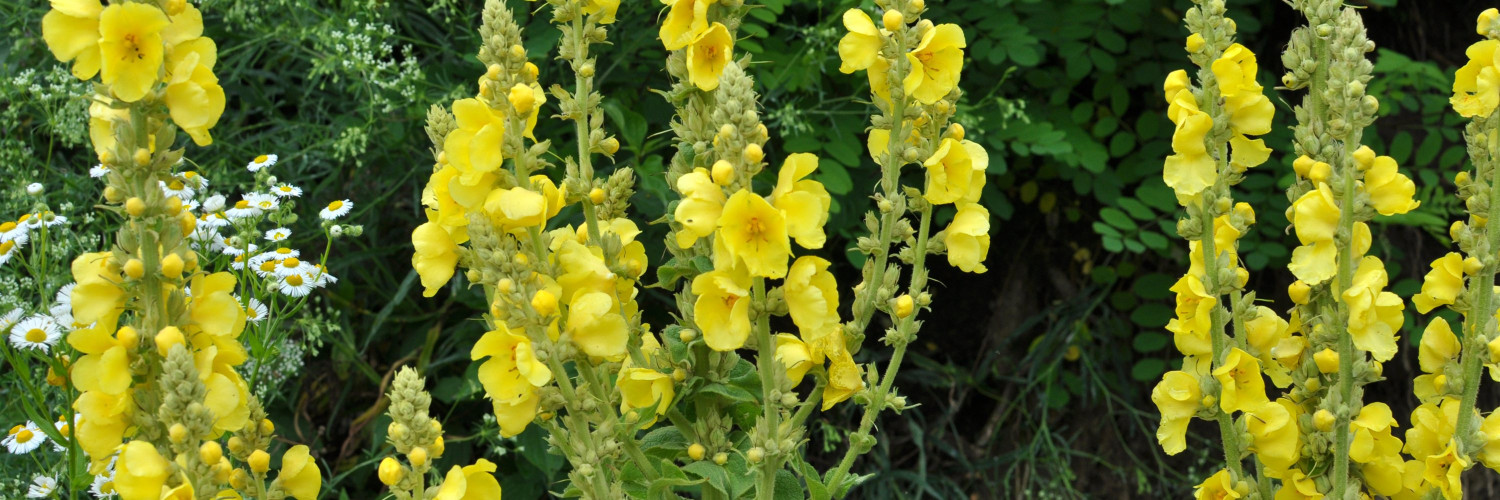
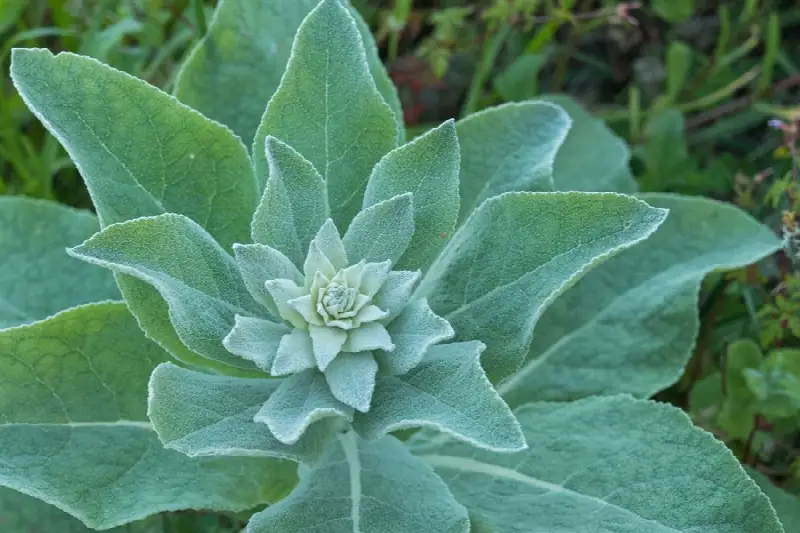
Mullein is a biennial. In its first year it forms a broad ground-hugging rosette of large, oval, grey-green leaves covered in dense branched hairs that give them a remarkable felt-like softness. In the second year it sends up a single unbranched flower spike that can reach two metres, densely packed with five-petalled yellow flowers that open a few at a time through the summer. The whole plant has a pale, woolly appearance that makes it easy to spot from a distance.
Chemical Composition
Two features define mullein leaf. The first is its mucilage — water-soluble polysaccharides that swell into a soft gel in liquid. This is a physical property rather than a pharmacological one, and it is the basis of the plant's classic role as a demulcent: something that coats and soothes. The second is its phytochemistry, which includes saponins, iridoid glycosides such as aucubin and catalpol, flavonoids including quercetin, and the phenylethanoid glycoside verbascoside — the compound the plant genus lent its name to.1 Our glycerite is a full-spectrum extract of certified organic dried leaf in flaxseed vegetable glycerin, a base that suits mucilage and the water-soluble fraction particularly well.
Habitat
Native to Europe, North Africa and western Asia, mullein travelled to North America with early settlers and naturalised so thoroughly that many people assume it is native there. It is a pioneer species: it colonises disturbed, poor, dry ground — road verges, quarries, building sites, burnt clearings — where its deep taproot and water-conserving woolly leaves give it an advantage. A single plant can release hundreds of thousands of seeds, which stay viable in soil for decades.
Taste
Mullein leaf is mild and slightly sweet, with a soft, faintly grassy character and none of the bitterness of many medicinal leaves. What is more noticeable than the flavour is the texture: the mucilage gives infusions and extracts a smooth, slightly silky quality on the tongue and throat. In a glycerin base that smoothness is rounded out further.
History of Use
Few plants have a more consistent traditional record. Dioscorides described mullein in the first century, and it appears steadily through European herbals thereafter. A 2021 review of Spanish folk medicine catalogued its documented uses across the musculoskeletal, circulatory, digestive and respiratory systems — with respiratory applications among the most frequently recorded.1 The same pattern appears independently in North American practice after the plant naturalised there. When cultures that never met reach for the same leaf for similar reasons, that is worth taking seriously as ethnobotany — though, as below, it is not the same thing as clinical proof.
The plant had practical uses too: its dried flower stalks were dipped in tallow and burned as torches, giving it old names such as candlewick and hag's taper, and the felted leaves served as improvised padding.
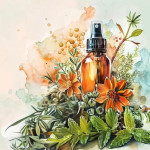
Mullein Leaf (Verbascum thapsus) Glycerite — Traditional Uses:
- Soothing, Demulcent Quality
- Traditional Respiratory Support
- Antioxidant Compounds
- Everyday Comfort
Alcohol-free and made with organic flaxseed glycerin — a base that carries the leaf's mucilage well.
Mullein and Its Soothing, Demulcent Quality
The most straightforward thing about mullein leaf is also the best understood. Mucilaginous polysaccharides absorb water and form a viscous, slippery gel — this is simple physical chemistry, not a contested claim. Herbal traditions worldwide use mucilage-rich plants such as marshmallow, slippery elm and mullein for exactly this coating, softening quality, and it is why mullein infusions feel noticeably smooth on the throat. It is the plant's least speculative property and the reason it has stayed in continuous use for two thousand years.
Mullein's Antioxidant and Anti-Inflammatory Chemistry
Verbascoside, mullein's signature phenylethanoid glycoside, has been studied directly in the laboratory. In human cell cultures, verbascoside reduced superoxide radical production and lowered the expression and activity of iNOS, an enzyme central to inflammatory signalling.2 The 2021 folk-medicine review takes a similar view from the other direction, proposing that the anti-inflammatory activity of mullein's phytochemicals — quercetin among them — is the most plausible common explanation for the breadth of its traditional applications.1
This is genuinely interesting chemistry. It is also, to be clear about the level of evidence, work in cells and computational modelling rather than in people.
A Note on the Evidence
Mullein is a case where tradition is far ahead of the clinical literature. The ethnobotanical record is unusually strong and consistent, the mucilage is real and its soothing behaviour is uncontroversial, and the laboratory work on verbascoside and flavonoids is sound as far as it goes. What does not yet exist is a body of randomized controlled trials in people. We therefore offer mullein leaf for what it honestly is — one of the most enduring traditional herbs of the Western repertoire, valued for its gentle, soothing character — and we do not claim more for it than that.
How to Use Mullein Leaf Glycerite
- Timing: Any time of day; many people prefer it in the evening or whenever a soothing herb is welcome.
- How to take it: Alcohol-free and mild, so it can be taken directly or stirred into water, warm tea or juice. Taking it in a warm drink suits its demulcent character particularly well.
- Consistency: Traditional use is regular rather than occasional — treat it as part of a routine.
- Storage: Keep in a cool, dry place away from direct sunlight.
Contraindications
- Allergies: Avoid if you have a known sensitivity to plants of the figwort family (Scrophulariaceae).
- Pregnancy and breastfeeding: Consult your healthcare provider before use.
- Medications: If you take prescription medication, consult your doctor before adding this extract to your routine.
- A note on the plant itself: Mullein seeds contain saponins and are not used in herbal preparations — our extract is made from the leaf only.
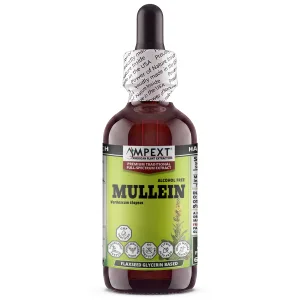
FROM THE AMPEXT RANGE
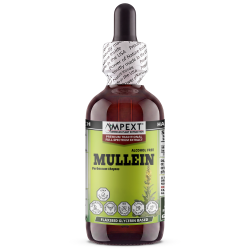
Mullein Leaf Glycerite (Verbascum thapsus)
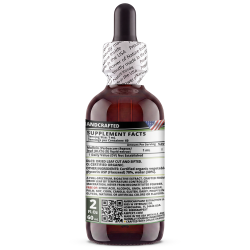
Alcohol-free · organic flaxseed glycerin · full-spectrum whole-leaf extract · 2 oz
References
- Searching for scientific explanations for the uses of Spanish folk medicine: a review on the case of mullein (Verbascum, Scrophulariaceae). Biology (Basel), 2021.
- Anti-inflammatory effects in THP-1 cells treated with verbascoside. Phytotherapy Research, 2010.
These statements have not been evaluated by the Food and Drug Administration. This product is not intended to diagnose, treat, cure or prevent any disease. The information in this article is provided for educational purposes only and is not medical advice; consult a qualified healthcare provider before starting any new supplement, especially if you are pregnant, nursing, taking medication, or have an underlying health condition.
Related Products
Leave a comment