



















Oregon grape (Mahonia aquifolium) is the holly-leaved evergreen of the Pacific Northwest — and one of the classic bitter roots of North American herbalism. Its name is doubly misleading: it is not a grape, and it is not confined to Oregon. What it is, is one of the richest North American sources of berberine, the brilliant yellow alkaloid that stains the root and gives the plant its character. This article looks at what the root actually contains, the tradition behind it, and an honest reading of the research.
Botanical Characteristics
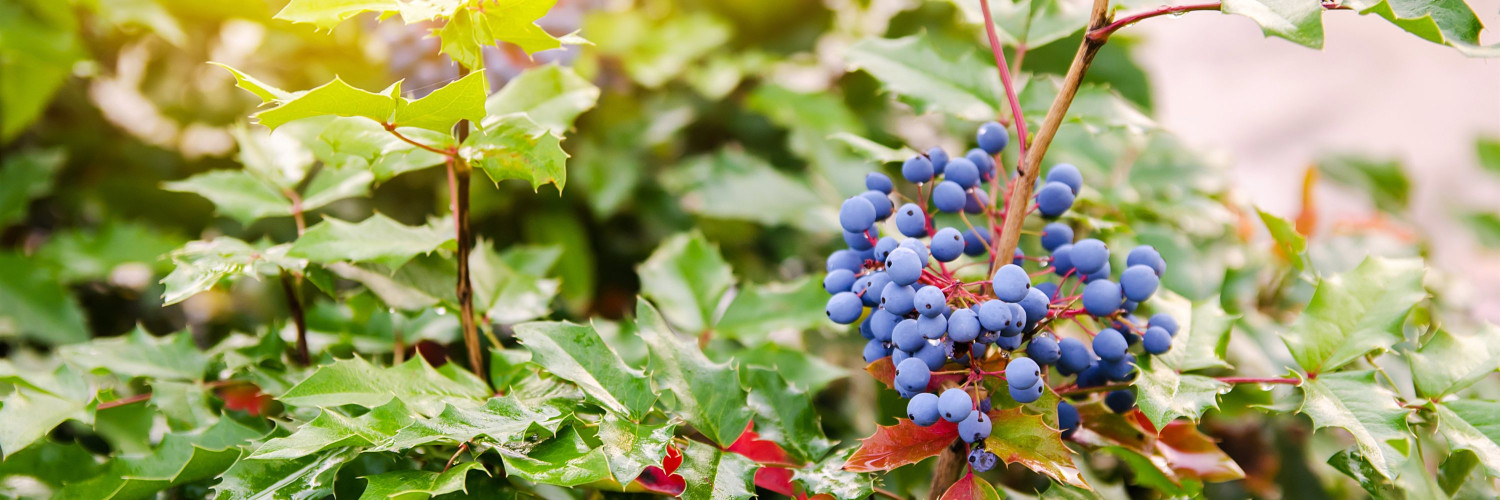
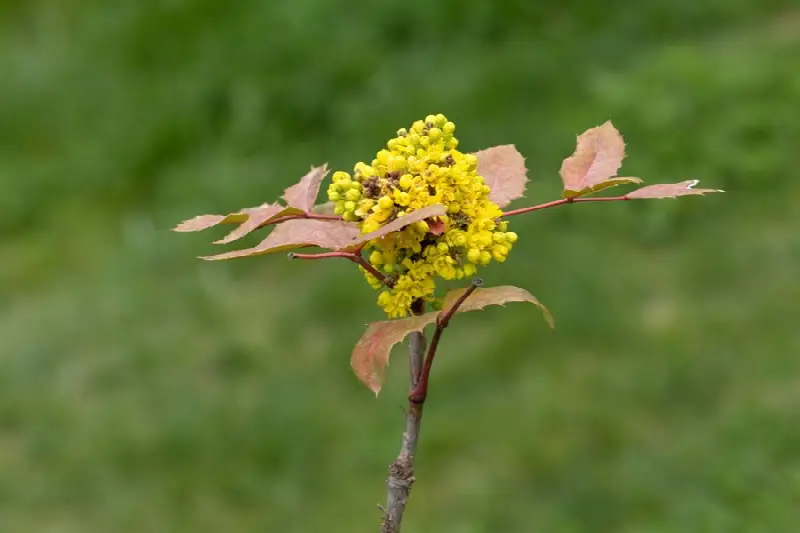
Oregon grape is a low evergreen shrub, typically one to two metres tall, with pinnate leaves made up of glossy, spine-toothed leaflets that look convincingly like holly. New growth is often bronze or reddish, and the foliage frequently turns purplish in winter. In spring it carries dense clusters of bright yellow flowers, followed by small dusky-blue berries with a waxy bloom — the "grapes" of the common name. Cut the root or stem and the inner wood is a startling chrome yellow: that is berberine, visible to the naked eye.
Chemical Composition
The root is defined by its protoberberine alkaloids. Analytical work on Mahonia aquifolium extract has quantified jatrorrhizine as the most abundant (around 12.7 mg/g), followed by berberine (2.8 mg/g), palmatine (2.0 mg/g) and berbamine (1.1 mg/g).1 Alongside the alkaloids the plant carries polyphenols — chlorogenic acid prominently, plus ferulic and p-coumaric acids, rutin and isoquercitrin.2 It is worth noting that these compounds are not evenly distributed: the alkaloids concentrate in the root and stem bark, while the flowers and fruits are polyphenol-rich but contain alkaloids only below detection limits.2 Our glycerite is a full-spectrum extract of certified organic root in flaxseed vegetable glycerin.
Habitat
Native to western North America — British Columbia south through Washington, Oregon and Idaho into northern California — Oregon grape grows in the understorey of conifer forests and along open, rocky slopes. It is notably shade-tolerant and drought-hardy once established, which is why it has become a popular landscaping shrub far outside its native range. It has been Oregon's state flower since 1899.
Taste
Emphatically bitter — this is one of the defining bitter roots, and berberine is the reason. In traditional practice that bitterness was not a flaw to be hidden but the point: bitter taste is the classic signature of the "bitter tonic" class of herbs, taken before meals precisely because the taste itself is part of the effect. Our glycerin base softens the edge without pretending it is not there.
History of Use
Indigenous peoples across the Pacific Northwest — including Salish, Blackfoot and Nlaka'pamux groups — used Oregon grape root long before European arrival, and the plant was adopted enthusiastically by nineteenth-century Eclectic physicians in the United States, who ranked it among their principal bitter alterative roots. The berries were eaten and made into preserves, and the yellow root gave a durable dye for baskets and wool. In the twentieth century interest shifted to berberine itself, which is now among the most-studied plant alkaloids in the world.
Oregon Grape Root (Mahonia aquifolium) Glycerite — Traditional Uses:
- Classic Bitter Tonic
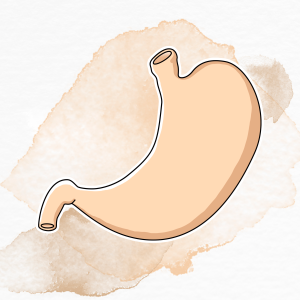
- Digestive Comfort
- Antioxidant Compounds
- Everyday Balance
Alcohol-free and made with organic flaxseed glycerin — the bitterness softened, not disguised.
Oregon Grape and the Bitter Tonic Tradition
The most defensible thing to say about Oregon grape root is also the oldest. Bitter-tasting roots occupy a distinct category in traditional European and American herbalism: taken in small amounts before food, they were valued for supporting appetite and comfortable digestion. This is not mysterious — bitterness is detected by receptors on the tongue and elsewhere in the digestive tract, and the response to bitter taste is a well-recognised physiological reflex. Oregon grape is among the most intensely bitter roots in the North American repertoire, and that is precisely why it earned its traditional place.
Antioxidant Chemistry
Beyond the alkaloids, Mahonia aquifolium carries a substantial polyphenol fraction. In a study of flower and green-fruit extracts, chlorogenic acid was the dominant compound, the extracts showed good free-radical scavenging in vitro, and in a rat model of induced inflammation they raised total antioxidant reactivity and lowered oxidative stress markers.2 We flag the detail honestly: that work examined flowers and fruits, not the root we extract, so it speaks to the plant's antioxidant chemistry in general rather than to our specific preparation.
A Note on the Evidence
Oregon grape is a plant where it is easy to overstate the case, so we will not. Berberine is genuinely one of the most-studied plant alkaloids, and the root's alkaloid content is well characterised. But most of the clinical literature on Mahonia aquifolium concerns topical preparations applied to the skin, which has nothing to do with a taken-by-mouth extract, and the oral research is largely laboratory and animal work. We therefore offer Oregon grape root for what it has always been: a classic bitter tonic root with a well-documented traditional record and a distinctive, well-characterised chemistry.
How to Use Oregon Grape Root Glycerite
- Timing: Traditionally taken shortly before meals — that is how bitter tonics have always been used.
- How to take it: Alcohol-free; take directly or in a small amount of water. Traditionalists would say to let it meet the tongue rather than swallowing it straight down, since the taste is part of the point.
- Start modest: This is a strongly bitter root — begin at the low end.
- Storage: Keep in a cool, dry place away from direct sunlight.
Contraindications
- Pregnancy and breastfeeding: Avoid. Berberine-containing plants are traditionally contraindicated in pregnancy, and berberine is not considered appropriate for infants.
- Medications: Berberine can affect the enzymes and transporters that process many prescription drugs, so interactions are plausible. If you take any prescription medication — particularly for blood sugar, blood pressure, or blood thinning, or any drug with a narrow safety margin — consult your doctor before use.
- Liver conditions: Consult your healthcare provider before use.
- Duration: Traditionally used in courses rather than continuously; if in doubt, discuss long-term use with a practitioner.
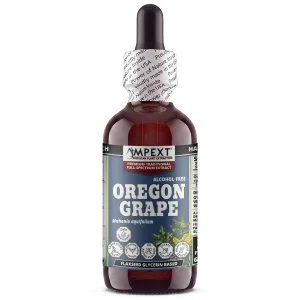
FROM THE AMPEXT RANGE
Oregon Grape Root Glycerite (Mahonia aquifolium)
Alcohol-free · organic flaxseed glycerin · full-spectrum root extract · 2 oz
References
- Pharmacological potential of three berberine-containing plant extracts obtained from Berberis vulgaris L., Mahonia aquifolium (Pursh) Nutt., and Phellodendron amurense Rupr. Biomedicines, 2024.
- Phytochemical analysis of anti-inflammatory and antioxidant effects of Mahonia aquifolium flower and fruit extracts. Oxidative Medicine and Cellular Longevity, 2018.
These statements have not been evaluated by the Food and Drug Administration. This product is not intended to diagnose, treat, cure or prevent any disease. The information in this article is provided for educational purposes only and is not medical advice; consult a qualified healthcare provider before starting any new supplement, especially if you are pregnant, nursing, taking medication, or have an underlying health condition.
Related Products
Leave a comment