


















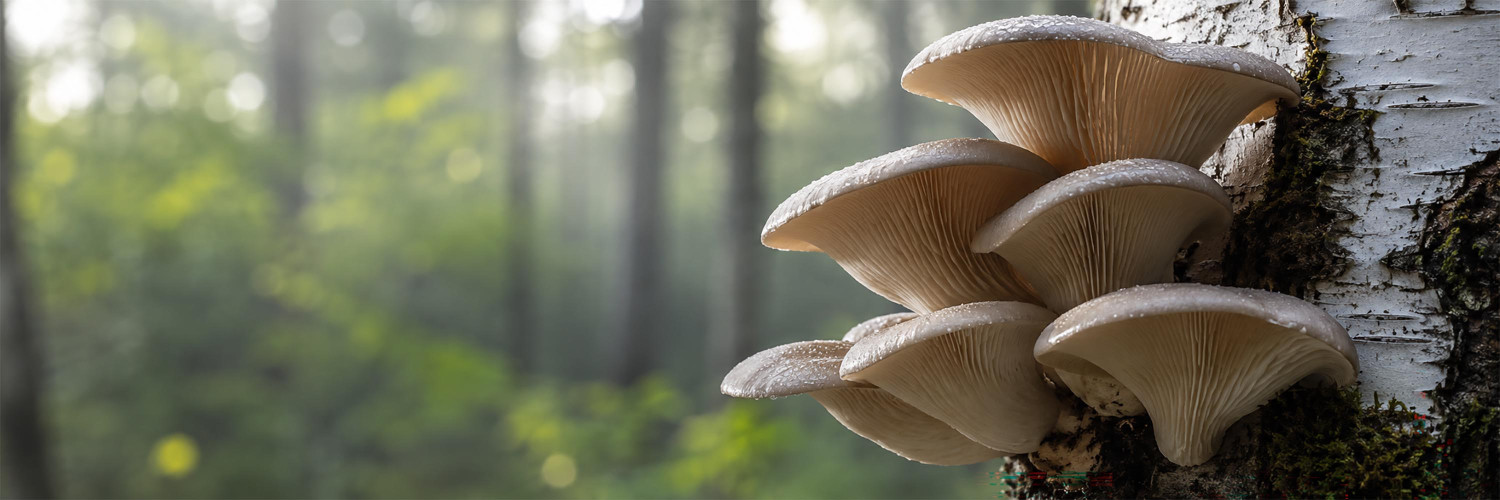
Oyster Mushroom (Pleurotus ostreatus) is one of the world's most cultivated culinary mushrooms — and a quietly capable functional one. Behind its familiar fan-shaped caps sits an unusual combination of active molecules: immune-active beta-glucans (marketed as pleuran), naturally occurring lovastatin-type compounds, and one of the richest dietary supplies of the cell-protecting antioxidant ergothioneine. This article looks at what is actually inside oyster mushroom, how it is traditionally used, and what the science does — and does not — say about each benefit.
Botanical Characteristics
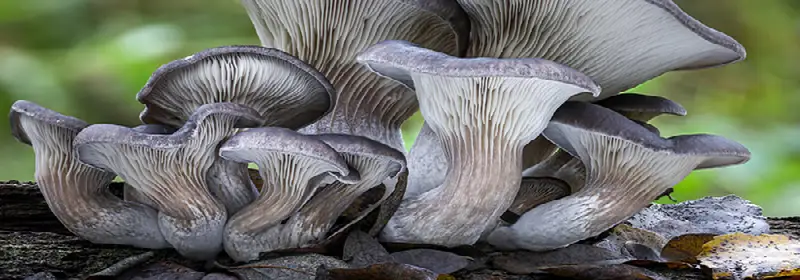
Oyster mushroom, Pleurotus ostreatus, is a wood-decaying fungus named for its smooth, shell-like cap that fans out in overlapping shelves — from soft grey and fawn to pale brown. The gills run down a short, off-centre stem, and the flesh is white, tender and mild. It grows on the decaying wood of hardwood trees and is now cultivated worldwide on straw and sawdust, which makes it one of the most sustainable functional mushrooms to produce.
Chemical Composition
The oyster mushroom's value comes from several distinct compound families. Its cell walls are rich in beta-glucans — branched (1→3),(1→6)-polysaccharides that interact with the innate immune system. It naturally contains small amounts of lovastatin (a statin-type molecule that acts on cholesterol metabolism), the sulphur antioxidant ergothioneine, phenolic compounds and flavonoids, B-group vitamins, and ergosterol — the provitamin that converts to vitamin D2 when the mushroom is exposed to sunlight or UV light. Our extract is standardised to contain at least 30% polysaccharides so that this active fraction is present in a consistent, verifiable amount.
Habitat
Native across temperate and subtropical forests of the Northern Hemisphere, oyster mushrooms fruit in clusters on dead and dying hardwoods, especially beech and oak. They are remarkably adaptable growers, thriving on agricultural by-products such as straw, which is why they moved so easily from wild foraging to large-scale cultivation.
Taste
Cooked oyster mushrooms are mild, delicate and faintly sweet, with a subtle seafood-like note that gives them their name and a tender, velvety texture. This gentleness is part of their appeal — the extract dissolves the mushroom's character into a supplement without any harsh, bitter edge.
History of Use
Oyster mushrooms have been gathered and eaten across Europe and Asia for centuries, valued as much for their easy cultivation and nourishing qualities as for their flavour. In more recent decades a specific oyster-mushroom beta-glucan preparation, pleuran, has been studied and used in Central Europe as a food supplement for everyday immune support — bringing this traditional food into the modern research literature.
Oyster Mushroom (Pleurotus ostreatus) Extract Benefits:
- Immune System
- Cardiovascular System
- Antioxidant & Cellular Resilience
- Skeletal System (Bone)
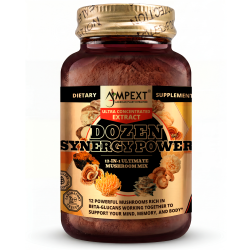
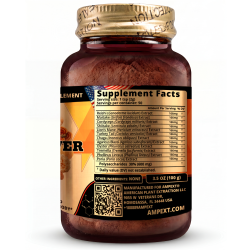
Oyster mushroom is one of the twelve mushrooms in our Dozen Synergy Power™ blend, where it rounds out the cardiovascular and structural side of the formula.
Oyster Mushroom and Immune Function Support
The best-studied part of the oyster mushroom is its beta-glucan fraction, isolated and standardised as pleuran. Beta-glucans are recognised by receptors on our innate immune cells and help prime their everyday activity, and pleuran is one of the few mushroom beta-glucans tested directly in people. In a large international, open-label study across seven countries, 1,030 children taking pleuran experienced about 45% fewer respiratory tract infections over six months than in the same period the year before.1 That result is encouraging, but it is important to read it honestly: the study had no placebo group, so part of the change may reflect children simply growing older.
A more rigorous design tells a complementary story about how pleuran behaves. In a randomized, double-blind, placebo-controlled trial in children with recurrent respiratory infections, pleuran reduced blood eosinophil counts and stabilised total IgE — markers of a calmer, better-regulated immune response, particularly in allergy-prone children.2 Together these studies position oyster-mushroom beta-glucan as gentle, everyday support for normal immune readiness rather than a forced "boost."
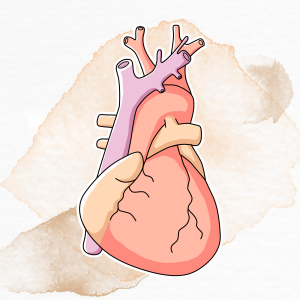
Oyster Mushroom and Cardiovascular Function Support
Oyster mushroom is one of very few edible mushrooms that naturally produces lovastatin, a compound in the same family as prescription cholesterol medicines, which was first identified in the fruiting bodies (concentrated especially in the gills).3 Alongside its soluble beta-glucan fibre, this gives the mushroom a plausible route for supporting lipid metabolism that is already within a normal range.
Human evidence points in a hopeful direction but is genuinely modest. A systematic review of clinical trials found that regular oyster-mushroom intake was associated with reductions in total cholesterol and triglycerides in most studies — while the authors were careful to rate the overall certainty of the evidence as low, because the trials were small and varied in quality.4 The honest summary is that oyster mushroom is a sensible, food-based way to support cardiovascular wellness as part of a healthy diet — not a substitute for cholesterol management.
Oyster Mushroom and Antioxidant & Cellular Resilience
Oyster mushrooms are an outstanding dietary source of ergothioneine, an unusual sulphur-containing antioxidant that the human body cannot make but actively transports into its most vulnerable tissues. Mushrooms are the richest food source of ergothioneine and of the antioxidant glutathione, with levels varying widely between species.5 Because our cells carry a dedicated transporter for ergothioneine, it is thought to act as a targeted defender against everyday oxidative stress — which is why it is sometimes nicknamed the "longevity vitamin."
Beyond ergothioneine, the mushroom supplies phenolics and flavonoids that add to its antioxidant capacity. In laboratory testing, oyster-mushroom extracts scavenged a wide range of free radicals — DPPH, hydroxyl, nitric oxide and hydrogen peroxide — confirming a broad antioxidant profile.6 This antioxidant density is a key reason oyster mushroom supports cellular resilience against normal oxidative wear-and-tear.
Oyster Mushroom and Skeletal (Bone) Function Support
Oyster mushroom holds an unusual nutritional trick: like a handful of other mushrooms, it can manufacture vitamin D2 from its own ergosterol when exposed to sunlight or UV light. In one study, sun-treated oyster mushroom went from essentially no measurable vitamin D2 to a meaningful amount within about 30 minutes of exposure.7 Since vitamin D supports the absorption of calcium and the maintenance of normal bones, and the mushroom also supplies bone-relevant minerals, oyster mushroom adds a modest structural dimension to the diet. (This vitamin-D2 potential depends on light exposure, so it is best understood as a property of the mushroom rather than a guaranteed dose in any given serving.)
What the Evidence Does — and Doesn't — Say
Oyster-mushroom research is promising, and its beta-glucan fraction is among the better-studied of any culinary mushroom in humans. Even so, much of the supporting evidence comes from laboratory work, and the human trials that exist are often small or lack a placebo group. We describe oyster mushroom as a nourishing, food-based way to support normal immune, cardiovascular, antioxidant and structural function — not as a proven treatment for any condition.
How to Use Oyster Mushroom Extract
- Dosage: As a dietary supplement, take 2–3 capsules daily.
- Timing: Best taken in the morning or early afternoon, at a consistent time each day.
- With meals: Taking the capsules with food supports absorption and minimises any digestive discomfort.
- Storage: Keep in a cool, dry place away from direct sunlight to preserve potency.
Contraindications
- Allergies: Avoid if you have a known allergy to mushrooms.
- Pregnancy and breastfeeding: Consult your healthcare provider before use.
- Medications: If you take immunosuppressants, anticoagulants (blood thinners) or cholesterol-lowering medication, consult your doctor before adding this extract to your regimen.
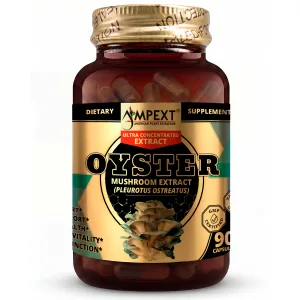
FROM THE AMPEXT RANGE
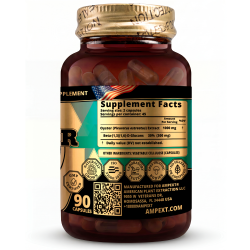
Oyster (Pleurotus ostreatus) Mushroom Extract, 90ct
Standardised to 30% polysaccharides · 90 vegetarian capsules
References
- Beta-(1,3/1,6)-D-glucan from Pleurotus ostreatus in the prevention of recurrent respiratory tract infections: an international, multicentre, open-label, prospective study. Frontiers in Pediatrics, 2022.
- Anti-allergic effect of Pleuran (β-glucan from Pleurotus ostreatus) in children with recurrent respiratory tract infections. Phytotherapy Research, 2014.
- Pleurotus fruiting bodies contain the inhibitor of 3-hydroxy-3-methylglutaryl-coenzyme A reductase — lovastatin. Experimental Mycology, 1995.
- Effect of the intake of oyster mushrooms (Pleurotus ostreatus) on cardiometabolic parameters: a systematic review of clinical trials. Nutrients, 2020.
- Mushrooms: a rich source of the antioxidants ergothioneine and glutathione. Food Chemistry, 2017.
- Comparative antioxidant activity and phytochemical content of five extracts of Pleurotus ostreatus (oyster mushroom). Scientific Reports, 2024.
- Impact of the natural resource of UVB on the content of vitamin D2 in oyster mushroom (Pleurotus ostreatus) under subtropical settings. Saudi Journal of Biological Sciences, 2018.
These statements have not been evaluated by the Food and Drug Administration. This product is not intended to diagnose, treat, cure or prevent any disease. The information in this article is provided for educational purposes only and is not medical advice; consult a qualified healthcare provider before starting any new supplement, especially if you are pregnant, nursing, taking medication, or have an underlying health condition.
Related Products
Leave a comment