


















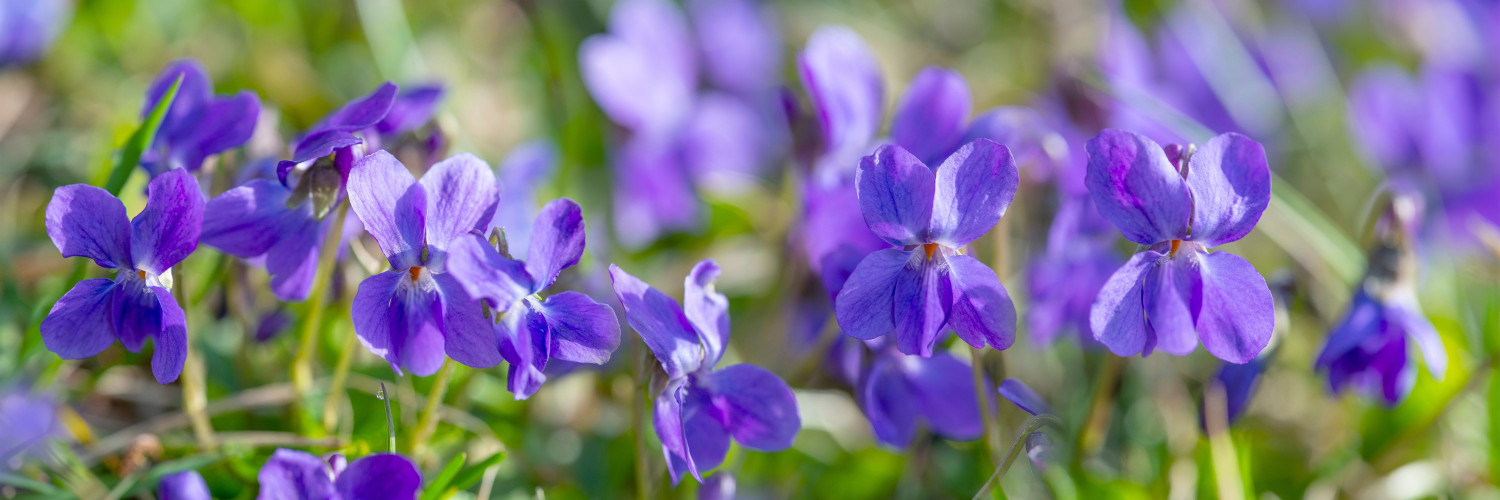
Sweet violet (Viola odorata) is the small purple flower that scents European woodland edges in early spring — and one of the most quietly remarkable plants in this range. It has a documented place in Persian, Greek and European practice going back two millennia, a perfume industry built on its scent, and a piece of biochemistry that only came to light in the 1990s: it manufactures some of the most chemically indestructible peptides known in the plant kingdom. This article looks at what is inside the plant, its long record of use, and where the modern science genuinely stands.
Botanical Characteristics
Sweet violet is a low, spreading perennial that grows from creeping runners, forming dense mats rarely more than 15 cm high. Its leaves are heart-shaped with scalloped edges, and its flowers — deep violet, occasionally white — have five petals with a distinctive spur at the back and appear from late winter into spring. It has an unusual botanical trick: after the showy scented flowers finish, it produces a second set of small, closed, self-pollinating flowers near ground level that never open at all, quietly setting most of the plant's seed.
Chemical Composition
A critical review of Viola odorata identifies flavonoids, saponins and alkaloids as its principal active classes.1 Alongside these the plant is notably rich in mucilage — the water-soluble polysaccharides that give violet preparations their characteristic soft, coating quality — and contains methyl salicylate, tannins, phenolics and vitamin C.
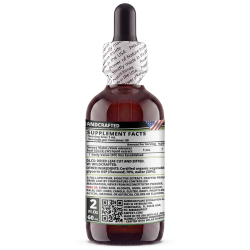
Its most distinctive constituents, though, are its cyclotides — a class of peptide so unusual that it deserves a section of its own, below. Our glycerite is a full-spectrum extract of certified organic aerial parts in flaxseed vegetable glycerin, a base particularly suited to the plant's mucilage and water-soluble fraction.
Habitat
Native to Europe, North Africa and western Asia, sweet violet grows in hedgerows, woodland margins and shaded banks, favouring moist, humus-rich soil and dappled light. It has naturalised widely in North America and Australia. It is among the earliest flowers of the year, often blooming while frosts are still about — one reason it became so firmly associated with the arrival of spring.
Taste
Sweet violet is mild and faintly sweet, with a soft floral character and a slight green note. The mucilage gives it a smooth, almost silky quality on the tongue. It is one of the pleasanter herbal extracts to take, which is precisely why traditional preparations so often took the form of syrups and confections.
History of Use
Few plants carry a longer or better-documented record. The critical review above catalogues its uses in Traditional Persian Medicine — where preparations included violet oil, decoctions, sweet syrups and confections — with respiratory applications among the most prominent.1 The Greeks made it the symbol of Athens, the Romans made violet wine, and medieval and Victorian Europe made violet syrup a household staple. Napoleon adopted it as a personal emblem, and the flower has anchored the perfumer's palette for centuries — a scent chemistry so peculiar that its ionones temporarily desensitise the very receptors that detect them, which is why the fragrance seems to vanish and return as you smell it.
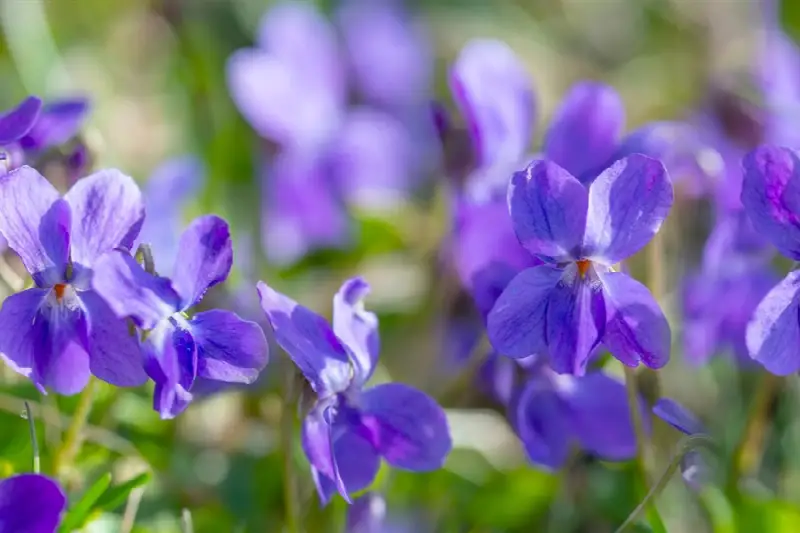
Sweet Violet (Viola odorata) Glycerite — Traditional Uses:
- Soothing, Demulcent Quality
- Traditional Respiratory Comfort
- Gentle, Pleasant-Tasting Extract
- Long-Documented Botanical Heritage
Alcohol-free and made with organic flaxseed glycerin — a base that carries the plant's mucilage particularly well.
Cyclotides: the Plant's Own Armour
This is the genuinely extraordinary part of sweet violet's biology, and it has nothing to do with health claims — it is simply remarkable chemistry.
Sweet violet produces cyclotides: small proteins of roughly 27–37 amino acids whose backbone forms a closed circle, locked further by a knotted arrangement of disulphide bonds known as a cystine knot. This architecture makes them exceptionally tough — they resist heat, chemical attack and enzymatic breakdown, to the point that fungi cannot degrade them over days. The plant produces a whole family of them, including kalata B1 and the cycloviolacins, and accumulates them in serious quantity: up to 1.5 grams per kilogram of fresh tissue, concentrated in the tissues most exposed to attack.2
Their role, as far as the plant is concerned, is defence: cycloviolacins show antifungal and antibacterial activity, while kalata B1 deters insect larvae.2 Viola odorata has consequently become a model organism in peptide science, where the cystine-knot scaffold is of considerable interest to researchers. We mention it here because it is fascinating, and because it is part of what makes this modest flower scientifically distinctive — not because it constitutes a claim about what the extract does in people.
The Soothing, Demulcent Tradition
The most consistent thread through two thousand years of violet use is its soft, coating quality. Mucilaginous polysaccharides absorb water and form a viscous gel — straightforward physical chemistry, and the reason mucilage-rich plants have been used as demulcents across every herbal tradition that had access to them. Combined with the plant's saponins, this is what made violet syrup a fixture of European households, and it is the least speculative thing that can be said about the plant.
A Note on the Evidence
Sweet violet's traditional record is unusually rich and its phytochemistry is genuinely interesting — the cyclotide work is first-rate science. The honest position is that modern clinical research on the plant remains limited, and much of what exists examines contexts well outside the scope of a dietary supplement. We therefore offer sweet violet for what it is: one of the most enduring and best-documented soothing herbs of the European and Persian traditions, in a gentle, pleasant-tasting alcohol-free form.
How to Use Sweet Violet Glycerite
- Timing: Any time of day; traditionally taken as a syrup, so it suits a warm drink well.
- How to take it: Alcohol-free and naturally mild — take directly or stir into water, warm tea or juice.
- Consistency: Traditional use is regular rather than occasional.
- Storage: Keep in a cool, dry place away from direct sunlight.
Contraindications
- Salicylate sensitivity: Sweet violet naturally contains methyl salicylate. If you are sensitive to aspirin or salicylates, avoid this extract.
- Blood thinners: Because of the salicylate content, consult your doctor if you take anticoagulant medication.
- Pregnancy and breastfeeding: Consult your healthcare provider before use.
- Allergies: Discontinue use if any sensitivity develops.
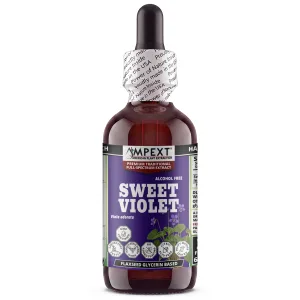
FROM THE AMPEXT RANGE
Sweet Violet Glycerite (Viola odorata)
Alcohol-free · organic flaxseed glycerin · full-spectrum extract · 2 oz
References
- A critical review on phytochemistry, pharmacology of Viola odorata L. and related multipotential products in traditional Persian medicine. Phytotherapy Research, 2017.
- How does the sweet violet (Viola odorata L.) fight pathogens and pests — cyclotides as a comprehensive plant host defense system. Frontiers in Plant Science, 2018.
These statements have not been evaluated by the Food and Drug Administration. This product is not intended to diagnose, treat, cure or prevent any disease. The information in this article is provided for educational purposes only and is not medical advice; consult a qualified healthcare provider before starting any new supplement, especially if you are pregnant, nursing, taking medication, or have an underlying health condition.
Related Products
Leave a comment