

















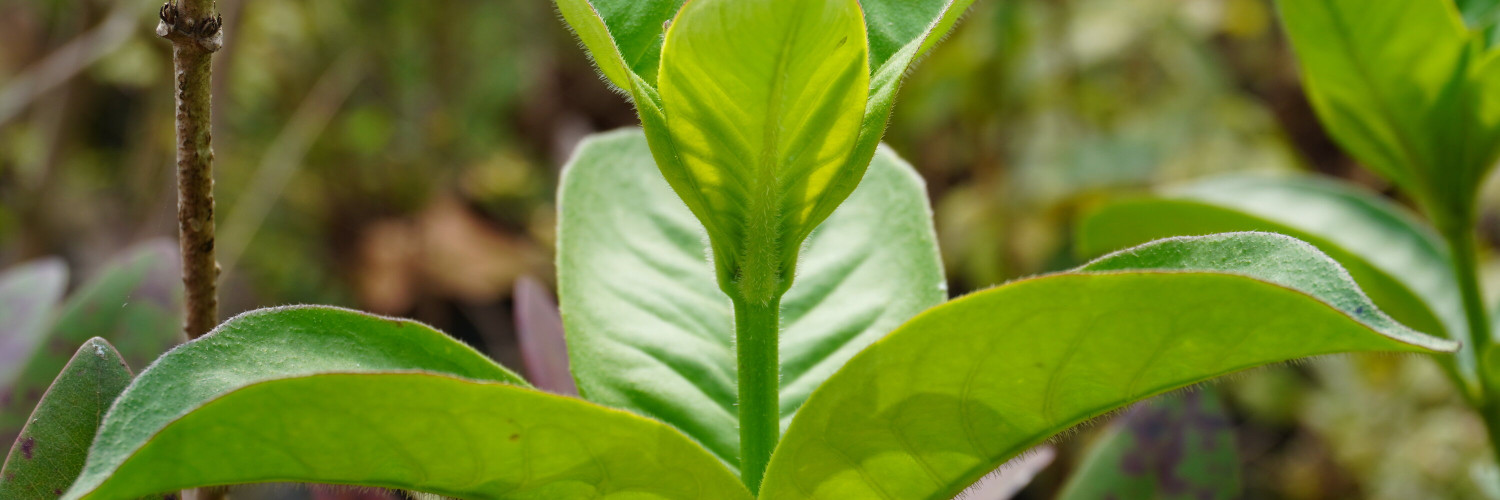
Cat's Claw (Uncaria tomentosa) is a woody climbing vine of the Amazon rainforest, named in Spanish uña de gato for the curved, hook-like thorns it uses to haul itself up into the canopy. Its inner bark has been simmered into a bitter tea by the Asháninka and other peoples of the Peruvian Amazon for generations, and it remains one of the best-known botanicals to come out of South America. This article covers what the vine is, what its bark contains, how it has been used, and what research — including two small studies in healthy adults — has found.
Botanical Characteristics
Cat's claw is a liana of the coffee family (Rubiaceae) that can climb more than 30 metres through the forest. Its leaves grow in opposite pairs along the stem, and at the base of each leaf pair it carries the paired, backward-curving woody thorns that look strikingly like a cat's claws and give the plant its name.1 The part used is the inner bark of the stem — the living layer beneath the outer bark — which is stripped, dried and cut. One practical point is worth knowing: "cat's claw" is a common name shared by several different plants, and Peruvian markets sell more than one species under it, so the botanical name on the label matters.1 Its close relative Uncaria guianensis is also called cat's claw; ours is Uncaria tomentosa.
Chemical Composition
The bark is best known for its oxindole alkaloids. One group, the pentacyclic oxindole alkaloids, includes pteropodine, isopteropodine, speciophylline, uncarine F and mitraphylline; a second, tetracyclic group includes rhynchophylline and isorhynchophylline.1 Remarkably, wild cat's claw occurs naturally in two chemical types, each dominated by one of these groups, and the two groups act differently in laboratory studies — which is one reason sourcing and identity matter so much with this plant.2 Alongside the alkaloids the bark carries triterpenes such as quinovic acid glycosides and ursolic acid, plant sterols, and a substantial polyphenol fraction: an analysis of eighteen commercial bark products identified twenty-five polyphenols, with proanthocyanidins (procyanidin dimers and trimers) prominent among them.1,3
Habitat
Cat's claw grows in tropical forests from Central America south through Peru, Bolivia and Brazil, typically in low mountain rainforest at around 600–1,000 metres, where it climbs through the trees toward the light.1 Because the bark is the part used, harvesting is done from mature vines in their native forest. Our extract is made from wildharvested inner bark sourced in Peru, the plant's best-known home.
Taste
Woody, bitter and astringent, with an earthy, tea-like depth — the taste of a bark that has always been prepared as a long-simmered decoction. Our concentrate is made in flaxseed glycerin and water, so glycerin's natural mild sweetness softens the bitterness considerably; most people find it easy to take in water or juice.
History of Use
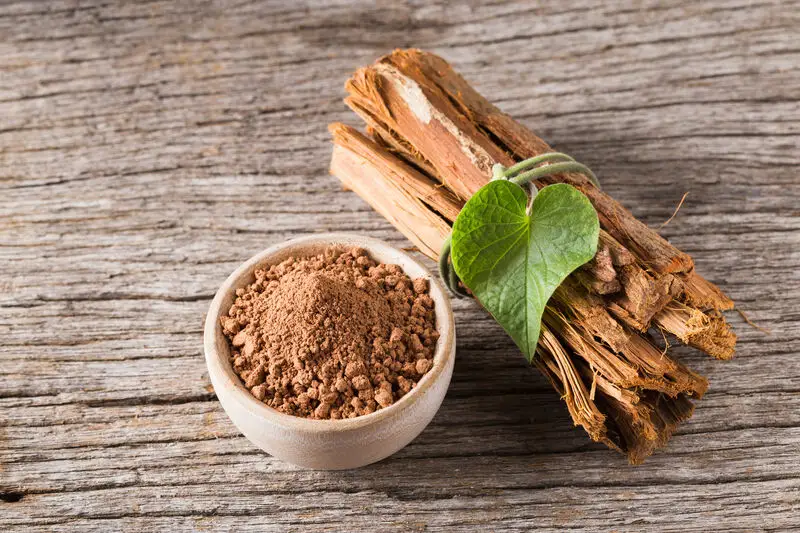
Cat's claw has been part of Amazonian practice for a very long time. Among the Asháninka of central Peru it holds a special place: the bark was prepared and used by their healers, and they distinguish the type of vine they consider right for use — an observation that modern chemistry later echoed in the plant's two chemical types.4,2 The traditional preparation is simple: sliced bark simmered in water for the better part of an hour and taken as a tea, valued for general resilience, for comfortable movement and for digestive wellbeing.1 From the 1970s and 1980s the bark drew attention from European researchers, and by the 1990s it had become one of the most widely sold South American herbs in North America and Europe.
Cat's Claw (Uncaria tomentosa) Concentrate — Traditional Uses:
- Classic Amazonian Inner-Bark Tradition
- Supports Healthy Immune Function*
- Supports the Body's Normal Inflammatory Response*
- Antioxidant Polyphenols and Proanthocyanidins
- Wildharvested in Peru, Alcohol-Free
Made with organic flaxseed glycerin. If you take prescription medication, especially blood thinners or immune-suppressing drugs, please read the note below first.
Cat's Claw and Healthy Immune Function
Two small human studies from the same research group looked at a water extract of the bark in healthy adults. In the first, twelve healthy adults working in the same environment took either 250 or 350 mg of the extract daily, or nothing, for eight weeks. Both supplemented groups showed less DNA damage and better DNA repair in their white blood cells after a standard laboratory oxidative challenge than the unsupplemented group, with no adverse findings in symptoms or blood tests.5 In the second, healthy men took the extract twice daily for two months and then received a routine vaccine; compared with unsupplemented men, their antibody levels stayed higher over the following five months.6 Both studies were small and made by one group, so they point in a direction rather than settle a question — but they are studies in healthy people, and they fit the bark's long reputation as a tonic for everyday resilience.
Cat's Claw and the Body's Inflammatory Response
In the laboratory, bark preparations act on the body's normal inflammatory signalling. A cat's claw decoction strongly reduced the release of TNF-α, one of the immune system's central signalling molecules, from cultured immune cells, and did so at very low concentrations; the same decoction also scavenged free radicals and protected cells against oxidative and UV stress.7 An interesting follow-up compared the two cat's claw species: Uncaria tomentosa contained about thirty-five times more oxindole alkaloids than U. guianensis, yet both moderated TNF-α and both showed antioxidant activity, and fractions without alkaloids were active too — evidence that the polyphenol and other non-alkaloid parts of the bark contribute as much as its famous alkaloids.8 In commercial bark products, antioxidant capacity tracked the proanthocyanidin content closely.3 These are cell and laboratory studies, not clinical trials, and we describe them that way.
A Note on the Evidence
The two human studies above used a hot-water extract of the bark — the same family of water-based preparation as a glycerin-and-water concentrate, though not the same product or amount. That, together with the laboratory finding that the bark's water-soluble polyphenols are active in their own right, is why we make cat's claw the traditional way, as a gentle water-based extract of the whole inner bark, and offer it as what it has long been in the Amazon: a daily bark tonic, taken steadily rather than in large amounts.
Why an Alcohol-Free Concentrate?
Our cat's claw is extracted in certified organic flaxseed vegetable glycerin and water (about 70% glycerin, 30% water) at low, controlled temperature and then gently concentrated, so each millilitre carries more of the bark than a standard glycerite. It contains no alcohol, which suits people who avoid it, and glycerin's mild sweetness rounds off a naturally bitter bark.
→ Curious how glycerites compare with tinctures? Read our Tincture vs Glycerite comparison
Using Cat's Claw Sensibly
For most healthy adults cat's claw is a long-used bark that is generally well tolerated over periods of several months.9 A few groups should check with a professional first, and it is easy to tell whether that is you. In laboratory tests cat's claw was one of the stronger herbal inhibitors of CYP3A4, a liver enzyme that clears many common medicines;10 it may also slow blood clotting and could add to the effect of blood-pressure medication.9 So if you take prescription medicines — particularly blood thinners, blood-pressure medication or immune-suppressing drugs — or have an autoimmune condition, ask your doctor or pharmacist before use, and stop two weeks before any planned surgery. If none of that applies to you, there is nothing here to worry about. Cat's claw is not recommended during pregnancy or breastfeeding.
How to Use Cat's Claw Concentrate
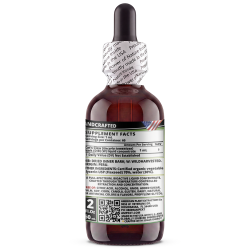
- Serving: About 1 mL — roughly 25 drops, or one full squeeze of the dropper bulb — up to three times per day.
- How to take it: Mix into water, juice or any drink you enjoy.
- Shake first: Cloudiness and sediment are natural signs of a full-spectrum extract.
- Consistency: Traditional use is a steady daily routine rather than occasional large servings.
- Storage: Keep tightly capped in a cool, dark place away from direct sunlight.
Contraindications
- Blood thinners and surgery: Speak with your doctor first if you take anticoagulant or antiplatelet medication; stop two weeks before scheduled surgery.
- Other prescription medicines: Cat's claw may affect how some medicines are cleared; check with your pharmacist if you take any regularly.
- Immune conditions: Ask your doctor first if you have an autoimmune condition, take immune-suppressing medication or have had an organ transplant.
- Pregnancy and breastfeeding: Not recommended.
- Children: Not for use by anyone under 18 without professional advice.
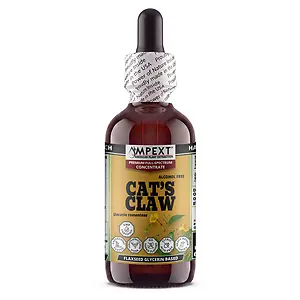
FROM THE AMPEXT RANGE
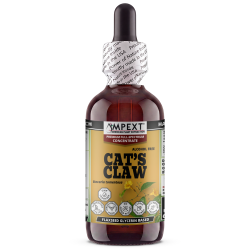
Cat's Claw Concentrate (Uncaria tomentosa)
Alcohol-free · organic flaxseed glycerin · wildharvested inner bark, Peru · full-spectrum concentrate
References
- Uncaria tomentosa as a Promising Natural Source of Molecules with Multiple Activities: Review of Its Ethnomedicinal Uses, Phytochemistry and Pharmacology. International Journal of Molecular Sciences, 2025.
- Uncaria tomentosa (Willd.) D.C.: cat's claw, uña de gato, or savéntaro. Journal of Alternative and Complementary Medicine, 1999.
- Polyphenolic Composition and Antioxidant Activity of Uncaria tomentosa Commercial Bark Products. Antioxidants, 2019.
- Uncaria tomentosa (Willd.) DC.--ethnomedicinal use and new pharmacological, toxicological and botanical results. Journal of Ethnopharmacology, 1999.
- DNA repair enhancement of aqueous extracts of Uncaria tomentosa in a human volunteer study. Phytomedicine, 2001.
- Persistent response to pneumococcal vaccine in individuals supplemented with a novel water soluble extract of Uncaria tomentosa, C-Med-100. Phytomedicine, 2001.
- Cat's claw inhibits TNFalpha production and scavenges free radicals: role in cytoprotection. Free Radical Biology and Medicine, 2000.
- Anti-inflammatory and antioxidant activities of cat's claw (Uncaria tomentosa and Uncaria guianensis) are independent of their alkaloid content. Phytomedicine, 2002.
- Cat's Claw. National Center for Complementary and Integrative Health (NIH), 2024.
- An in vitro evaluation of human cytochrome P450 3A4 inhibition by selected commercial herbal extracts and tinctures. Phytomedicine, 2000.
These statements have not been evaluated by the Food and Drug Administration. This product is not intended to diagnose, treat, cure or prevent any disease. The information in this article is provided for educational purposes only and is not medical advice; consult a qualified healthcare provider before starting any new supplement, especially if you are pregnant, nursing, taking medication, or have an underlying health condition.
Related Products
Leave a comment