
















Hibiscus, or roselle (Hibiscus sabdariffa), is the plant behind one of the world's best-loved drinks: the deep ruby, cranberry-tart infusion poured as agua de Jamaica in Mexico, bissap in West Africa, karkadé in Egypt and sorrel across the Caribbean. What goes into the cup is not the petal but the fleshy red calyx that cups the flower, and it carries a striking set of natural pigments and fruit acids. This article covers what the plant is, what its calyces contain, how people have used it, and what controlled research in adults has found.
Botanical Characteristics
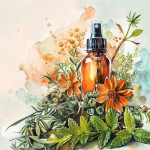
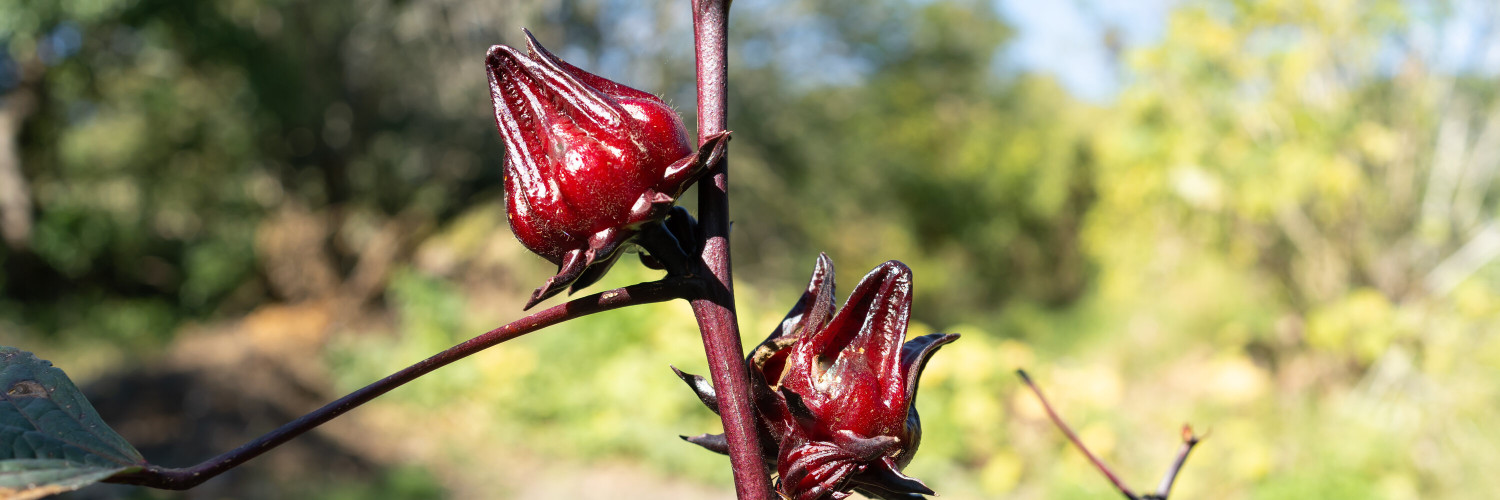
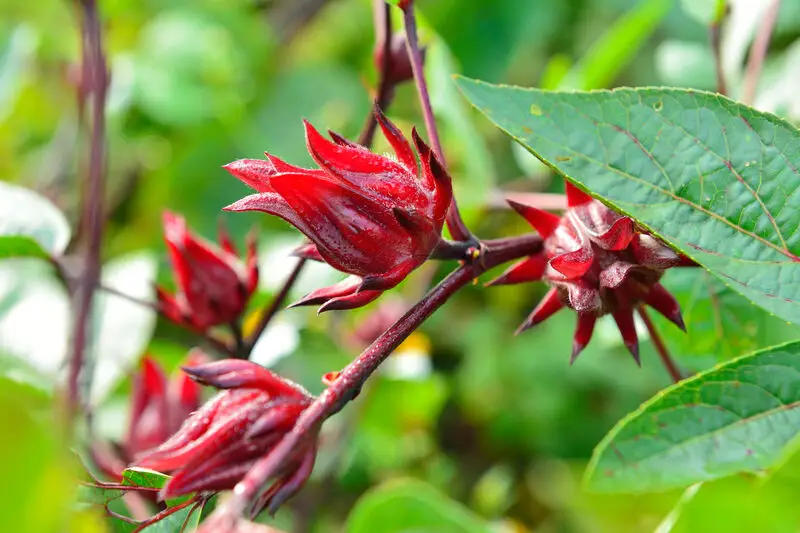
Roselle is an annual or short-lived shrub of the mallow family (Malvaceae), a relative of okra and cotton, growing to around two metres with reddish stems and lobed leaves. Its pale yellow flowers, each with a dark red eye, open for a single day. Once the petals fall, the five sepals around the developing seed pod swell into a thick, glossy, crimson calyx — the part that is harvested, dried and used.1 It is worth separating roselle from its showy garden cousin, the tropical Chinese hibiscus (Hibiscus rosa-sinensis): the two share a genus and a name in everyday speech, but the tart red drink, and our extract, come from Hibiscus sabdariffa.
Chemical Composition
The calyx owes its colour to anthocyanins, the same family of water-soluble pigments that colour blueberries and red grapes. In roselle two dominate: delphinidin-3-sambubioside and cyanidin-3-sambubioside.1 A detailed laboratory analysis of dried calyces measured delphinidin-3-sambubioside at about 218 mg per 100 g, with the coffee-family polyphenol 3-caffeoylquinic acid close behind; together the two made up almost 60% of the total phenolic content, and the same calyces also carried lutein-type carotenoids.2 The sharp taste comes from organic acids — citric, malic, tartaric and ascorbic acid, plus two that are characteristic of the plant, hibiscus acid and hydroxycitric acid.3 Phenolic acids such as protocatechuic acid and a range of flavonoids complete a profile that is broad rather than built on a single compound.1
Habitat
Roselle is generally considered native to Africa and today is cultivated throughout the tropics and subtropics, with major production in China, Egypt, Indonesia, Mexico, Nigeria, Thailand and Saudi Arabia.3 It is a warm-season crop that needs a long, frost-free growing period and flowers as the days shorten, which is why the calyx harvest in the northern tropics falls in late autumn — and why roselle drinks are a traditional festive drink in parts of the Caribbean. Our extract is made from certified organic dried calyces.
Taste
Bright, tart and fruity, often compared with cranberry or red currant, with a gentle floral note. The colour in the glass is the giveaway: a deep ruby red that shifts toward magenta in an acidic drink. In a tincture the tartness comes through clearly; in a flaxseed glycerin base it is softened and rounded by glycerin's natural mild sweetness, which many people find makes hibiscus easy to enjoy straight into water.
History of Use
Few botanicals are drunk on so many continents. Roselle travelled from Africa to Asia, then with the Atlantic trade to the Caribbean and Central America, and it took a new name in each place: bissap and zobo in West Africa, karkadé along the Nile, flor de Jamaica in Mexico, sorrel in Jamaica and Trinidad. Everywhere it has been used both as an everyday food — hot and cold drinks, jams, sauces and a natural red food colouring — and as a traditional household remedy, valued as a cooling, refreshing drink in hot weather and as part of general wellness routines.1 That long record as a food is one reason roselle is regarded as a plant with a good tolerability profile.1
Hibiscus (Hibiscus sabdariffa) Extract — Traditional Uses:
- A Tart, Cooling Drink Botanical Used Worldwide
- Naturally Rich in Ruby Anthocyanin Pigments
- Antioxidant Polyphenols and Fruit Acids
- Supports Healthy Blood Pressure Already Within the Normal Range*
- Supports General Cardiovascular Wellness*
Available as an organic cane alcohol tincture or an alcohol-free flaxseed glycerin glycerite. If you take blood pressure medication or a diuretic, please read the note below first.
The Ruby Pigments: Anthocyanins and Antioxidant Capacity
Anthocyanins are among the most studied plant pigments. Their ring structure lets them neutralise reactive oxygen molecules in the test tube, and roselle calyces score well on standard antioxidant assays — the analysis cited above measured an ABTS capacity of about 7.8 µmol Trolox equivalents per gram of calyx, with the anthocyanins and caffeoylquinic acids doing most of the work.2 Laboratory antioxidant numbers do not translate directly into effects in the body, but they explain why a dark, tart calyx has drawn so much research interest — and why roselle sits comfortably alongside berries and other deeply coloured plant foods in a polyphenol-rich diet.
Hibiscus and Healthy Blood Pressure
This is the area where roselle has been studied most in people. Reviews of the plant point to several plausible routes: its polyphenols relax blood-vessel tissue in laboratory preparations, its extracts modestly inhibit the angiotensin-converting enzyme that is part of the body's normal blood-pressure regulation, and it has a mild diuretic action.1 The clinical picture comes from a 2022 systematic review that pooled 17 randomized controlled trials in adults: compared with placebo, systolic readings in the hibiscus groups averaged about 7 mmHg lower.4 Results varied considerably from trial to trial, and the largest differences were seen in people whose readings started toward the upper end of the range — so the fair summary is that hibiscus, taken regularly, may help maintain healthy blood pressure levels that are already within the normal range, as part of a balanced diet and active lifestyle.
What About Cholesterol?
The lipid picture is more mixed. An earlier meta-analysis of six trials found no significant overall difference in total, LDL or HDL cholesterol or triglycerides compared with control groups,5 while the larger 2022 review found a small difference in LDL cholesterol in favour of hibiscus.4 Taken together, hibiscus is best seen as a tart, polyphenol-rich addition to a heart-friendly routine that already keeps healthy cholesterol levels within the normal range, rather than as a lipid supplement in its own right.
A Note on the Evidence
Almost all of the human trials used hibiscus tea or a dried-calyx preparation taken daily for several weeks, so they tell us about regular use of the whole calyx rather than about any particular dose of a liquid extract. Our extracts are made from the same plant part, whole and full-spectrum, and are best taken the same way the studies did it: steadily, every day, as part of a routine.
Tincture or Glycerite?
We make hibiscus two ways from the same certified organic dried calyces. The TRUE™ Tincture uses organic cane alcohol and water (45–55% alcohol by volume) with temperature-controlled, ultrasound-assisted maceration; alcohol and water together draw out compounds of different solubility. The Glycerite is alcohol-free, made with 70% organic flaxseed vegetable glycerin and 30% water by temperature-controlled maceration with agitation — anthocyanins are water-soluble, so they suit a glycerin-and-water base well, and glycerin's mild sweetness rounds off hibiscus's tartness.
→ Not sure which base suits you? Read our Tincture vs Glycerite comparison
Using Hibiscus Sensibly
For most healthy adults hibiscus is about as familiar as a botanical gets — people in dozens of countries drink it by the jug. There is one group for whom a quick check makes sense. Because hibiscus works in the same direction as blood-pressure medicines and has a mild diuretic action, its effect can add to theirs; an animal study found that a roselle extract changed how a common diuretic, hydrochlorothiazide, was handled by the body.6 A small study in healthy volunteers also found that a hibiscus drink sped up the body's clearance of acetaminophen (paracetamol).7 So if you take blood-pressure medication, a diuretic or other regular prescription medicines, ask your doctor or pharmacist before adding hibiscus. If you don't, there is nothing here to worry about — just keep to the label serving. Hibiscus is not recommended during pregnancy.
How to Use Hibiscus Extract
- Serving: About 1 mL — one full squeeze of the dropper bulb — up to three times per day.
- How to take it: Add to water, juice or any drink you enjoy, ideally with or after a meal. Hibiscus is lovely in a glass of cold water — it turns it ruby and tart.
- Shake first: Cloudiness and sediment are natural signs of a full-spectrum extract.
- Consistency: The human research used daily intake over several weeks; a steady routine suits hibiscus better than occasional servings.
- Storage: Keep in a cool, dry, dark place.
Contraindications
- Blood-pressure medication and diuretics: Speak with your doctor or pharmacist before use, as effects may add up.
- Other prescription medicines: Hibiscus can change how some medicines are cleared; check with your pharmacist if you take any regularly.
- Pregnancy and breastfeeding: Not recommended.
- Children: Not for use by anyone under 18 without professional advice.
- Allergy: Do not use if you are allergic to hibiscus or any ingredient.
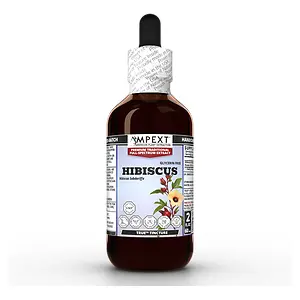
FROM THE AMPEXT RANGE
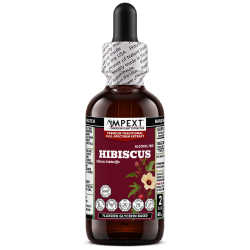
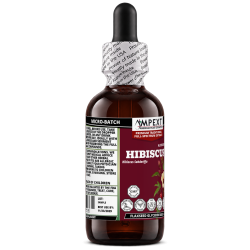
Hibiscus TRUE™ Tincture (Hibiscus sabdariffa)
Organic cane alcohol · certified organic dried calyx · ultrasound-assisted extraction · from 2 oz
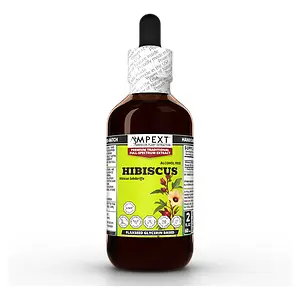
FROM THE AMPEXT RANGE
Hibiscus Glycerite (Hibiscus sabdariffa)
Alcohol-free · organic flaxseed glycerin · certified organic dried calyx · from 2 oz
References
- Hibiscus sabdariffa L. - a phytochemical and pharmacological review. Food Chemistry, 2014.
- Composition analysis of carotenoids and phenolic compounds and antioxidant activity from hibiscus calyces (Hibiscus sabdariffa L.) by HPLC-DAD-MS/MS. Phytochemical Analysis, 2019.
- Organic Acids from Roselle (Hibiscus sabdariffa L.)-A Brief Review of Its Pharmacological Effects. Biomedicines, 2020.
- A systematic review and meta-analysis of the effects of Hibiscus sabdariffa on blood pressure and cardiometabolic markers. Nutrition Reviews, 2022.
- Effects of Hibiscus sabdariffa L. on serum lipids: a systematic review and meta-analysis. Journal of Ethnopharmacology, 2013.
- Herb-drug interaction between the extract of Hibiscus sabdariffa L. and hydrochlorothiazide in experimental animals. Journal of Medicinal Food, 2011.
- Effect of zobo drink (Hibiscus sabdariffa water extract) on the pharmacokinetics of acetaminophen in human volunteers. European Journal of Drug Metabolism and Pharmacokinetics, 2004.
These statements have not been evaluated by the Food and Drug Administration. This product is not intended to diagnose, treat, cure or prevent any disease. The information in this article is provided for educational purposes only and is not medical advice; consult a qualified healthcare provider before starting any new supplement, especially if you are pregnant, nursing, taking medication, or have an underlying health condition.
Related Products
Leave a comment