




















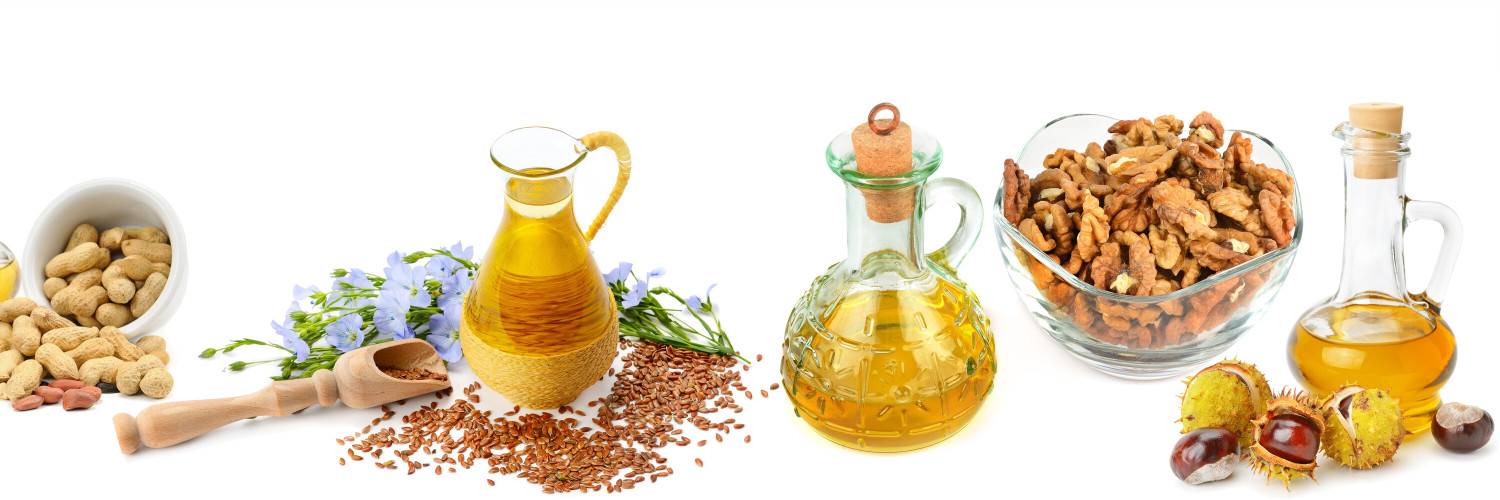
Walk down the oil aisle and you are looking at five bottles that all claim to be good for your heart — olive, canola, flaxseed, avocado, walnut — at prices that differ by a factor of ten. They are genuinely different products, but not in the way the labels suggest, and the single most important fact about them is one that almost no bottle mentions. This article sorts out what each oil actually contains, what the evidence supports, how they work, which one suits which job in a real kitchen — and why the honest answer usually involves more than one bottle. It also takes on the question people ask most often and get answered worst: whether any of this matters for heart rhythm, where one of these five has randomized evidence the others do not.
Start Here: What Matters Most Is What the Oil Replaces
Before comparing oils to each other, there is a bigger effect to understand — and it explains most of the heart-related evidence in this whole field. The clearest finding in nutrition science is not that a particular oil is magic; it is that swapping saturated fat for unsaturated fat changes cardiovascular outcomes. A Cochrane systematic review of randomized trials found that reducing saturated fat intake for at least two years produced a meaningful reduction in combined cardiovascular events, that greater reductions in saturated fat produced greater reductions in events, and that replacing those calories with polyunsaturated fat was one of the useful strategies.1
The practical translation: a spoonful of any of the five oils below, used instead of butter, lard or a hard cooking fat, is doing the large part of the work. Which of the five you choose is a real but smaller refinement on top of that. Anyone selling you the refinement while ignoring the swap has the story backwards.
The Three Fats, In Plain Language
Every cooking oil is a blend of three kinds of fatty acid, and the ratio is what distinguishes them:
- Saturated (SFA). Solid at room temperature, very heat-stable. Plentiful in butter, coconut and palm; present in small amounts in all the oils here.
- Monounsaturated (MUFA), chiefly oleic acid. The backbone of olive and avocado oil. Reasonably heat-stable and the fat most associated with Mediterranean-style eating.
- Polyunsaturated (PUFA). Two families matter — omega-6 (linoleic acid), abundant in most seed oils, and omega-3. The plant omega-3 is alpha-linolenic acid (ALA), and it is the fragile one: more double bonds means more flavour, more nutritional interest, and far less tolerance of heat, light and time.
One point deserves emphasis because marketing blurs it constantly. The omega-3 in plants (ALA) is not the same molecule as the omega-3 in fish (EPA and DHA). The body can convert ALA, but inefficiently — a small percentage to EPA and very little to DHA. Flaxseed oil is a genuinely rich ALA source; it is not a vegetarian equivalent of fish oil, and honest labels do not claim it is.
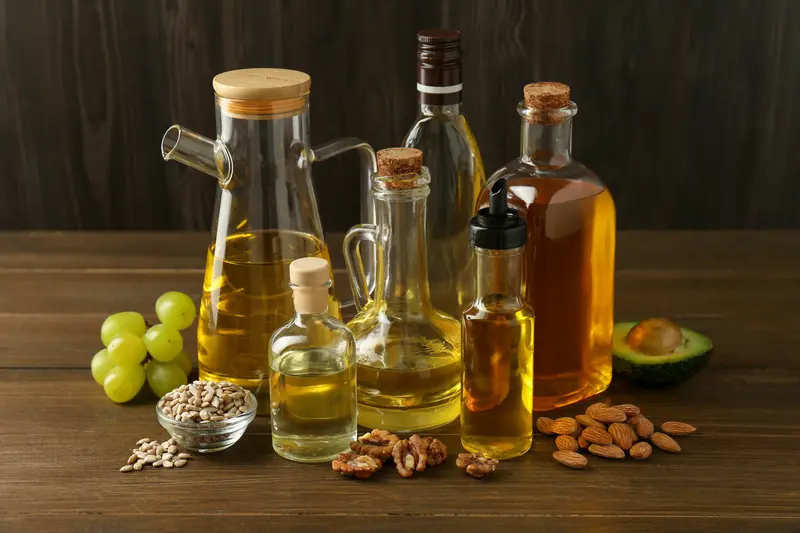
The five oils at a glance:
- Olive (extra virgin) — MUFA + polyphenols; the best-evidenced
- Canola — lowest saturated fat, useful ALA, neutral
- Flaxseed — highest ALA; cold use only
- Avocado — MUFA, very high smoke point
- Walnut — ALA plus polyphenols; the underrated one
Prices differ tenfold. Usefulness does not — each earns its place in a different job.
Extra Virgin Olive Oil — The One With the Strongest Evidence
Roughly 70–80% oleic acid, modest omega-6, very little ALA — and, uniquely among common oils, a meaningful load of phenolic compounds (hydroxytyrosol, oleuropein derivatives, oleocanthal) that survive only if the oil is extra virgin, i.e. mechanically pressed and unrefined. Refining olive oil strips them out; "light" or "pure" olive oil is largely oleic acid without the phenolics.
The evidence base is the deepest here. In the PREDIMED randomized trial, adults at high cardiovascular risk assigned to a Mediterranean diet supplemented with extra virgin olive oil had fewer major cardiovascular events than those advised to follow a low-fat diet.2 It is worth knowing that this trial had a complicated history — irregularities in how some participants were randomized led the original report to be withdrawn and republished in 2018 with corrected analyses; the conclusions held. We cite the corrected version.
The phenolics have their own, narrower evidence. The multi-centre EUROLIVE crossover trial gave men olive oils differing only in phenolic content and found that oxidative damage to LDL particles fell as phenolic content rose, in a dose-dependent way. Notably, this did not translate into a change in LDL cholesterol levels themselves.3 That distinction is worth carrying: the polyphenol story is about protecting the particle from oxidation, not lowering the number on a lab report — two different things that get merged in advertising.
Kitchen note: the belief that olive oil is unsuitable for cooking is largely a myth. Its phenolics and high oleic content make it more oxidatively stable than its modest smoke point suggests; it handles sautéing and roasting perfectly well. Reserve your best peppery bottle for raw use, where its flavour and phenolics are the point.
Canola (Rapeseed) — The Unglamorous Workhorse
Canola has the lowest saturated fat of any common cooking oil (about 7%), roughly 60% oleic acid, and around 9% ALA — an unusually good ratio on paper, at supermarket prices, with a neutral flavour and a high smoke point.
Two objections come up constantly and both deserve a straight answer. First, erucic acid: old industrial rapeseed was high in it, which is precisely why canola exists — it was conventionally bred in the 1970s to be low-erucic, and food-grade canola has been so ever since. Second, refining: most canola is solvent-extracted and refined, which removes flavour compounds and most phenolics. That is a real difference from extra virgin olive oil — you are buying a clean fatty-acid profile, not a package of plant polyphenols. Cold-pressed canola exists if you want the middle ground.
Canola will never be a lifestyle product. But judged by the mechanism that matters most — displacing saturated fat cheaply, in the large volumes real cooking uses — it does the job honestly.
Flaxseed — Richest in ALA, and the Most Misunderstood
Flaxseed oil is the richest common plant source of ALA, at roughly 50–55%. It is also the most fragile oil on this list: it oxidises quickly, tastes bitter when it turns, must be refrigerated in dark glass, and should never be heated. It belongs on finished food — dressings, yoghurt, a drizzle over vegetables — and nowhere near a pan.
Here is the honest complication, and it matters. The most striking flaxseed trial — six months of daily flaxseed in adults with high blood pressure, which reported reductions of around 10 mmHg systolic and 7 mmHg diastolic4 — used 30 grams of milled whole flaxseed, not flaxseed oil. Whole seed carries lignans and soluble fibre that the pressed oil largely leaves behind. So the popular shorthand "flaxseed lowers blood pressure, therefore buy flaxseed oil" quietly swaps the intervention. If it is that trial's result you are after, the evidence points to the ground seed. The oil is a concentrated ALA source, which is a different and narrower proposition.
Avocado Oil — MUFA That Tolerates Real Heat
Compositionally avocado oil is close to olive: about 70% oleic acid, with more saturated fat than canola. Its practical advantage is a genuinely high smoke point, which makes it the most comfortable choice on this list for searing and high-temperature roasting.
Its direct evidence is thinner and more interesting than most summaries admit. In a controlled feeding trial, adults ate a moderate-fat diet including one Hass avocado a day, compared against a matched moderate-fat diet in which high-oleic oils were used specifically to reproduce the avocado's fatty acid profile — a design built to ask whether avocado offers anything beyond its fat. The avocado diet produced more favourable changes in LDL particle measures than the matched-oil diet.5 That is a point in favour of the whole fruit, with its fibre, sterols and carotenoids — not automatically of the extracted oil. Buy avocado oil for its heat tolerance and flavour, which are real; eat the actual avocado for the rest.
One caveat specific to this product: avocado oil has been repeatedly found to be among the most adulterated oils on the market, often diluted with cheaper oils. Buy from sellers who publish testing.
Walnut Oil — The One Almost Nobody Mentions
If we add a fifth, it is walnut. It carries around 10% ALA — more than canola — plus a substantial omega-6 fraction and, unusually for a nut oil, a real polyphenol content. Walnuts themselves were the other arm of the PREDIMED trial, and that arm also outperformed the low-fat control.2
Like flaxseed oil it is delicate, unsuited to heat, and best refrigerated. It is expensive, and its argument is culinary as much as nutritional: a small amount finishes a dish in a way no other oil here does. Treat it as a flavour ingredient that happens to carry ALA and polyphenols.
How They Actually Work — Three Different Mechanisms
The oils are not competing versions of one effect. They act through genuinely different routes, which is exactly why combining them is reasonable.
- Fatty acid substitution. The dominant mechanism, and the one behind the Cochrane finding.1 Replacing saturated fat with unsaturated fat shifts the body's handling of circulating lipids. This is where the bulk of the benefit sits — and every oil on this list delivers it.
- Polyphenol antioxidant activity. Extra virgin olive oil's specialty, shared in smaller measure by walnut and cold-pressed oils. Here the target is oxidative damage to LDL particles rather than LDL quantity.3 Refined oils have essentially none of this.
- ALA-specific signalling. The flaxseed blood-pressure work points toward ALA-driven changes in oxylipins — signalling molecules derived from fatty acids — as a mechanism distinct from simple fat substitution.4 This is an active research area rather than settled ground.
Heart Rhythm: Where Olive Oil Genuinely Stands Apart
This is the question people ask most, and here one oil separates itself from the rest of the list on actual randomized evidence.
Within the PREDIMED trial, investigators tracked atrial fibrillation — the most common sustained heart rhythm disturbance — as a pre-specified outcome. Among participants assigned to the Mediterranean diet supplemented with extra virgin olive oil, the incidence of new atrial fibrillation was 38% lower than in the control group advised to eat a low-fat diet (hazard ratio 0.62; 95% CI 0.45–0.85).6 Notably, the mixed-nuts arm of the same trial did not show a comparable effect on rhythm — the signal was specific to the olive oil arm. A dedicated follow-up trial, PREDIMAR, has since been testing whether the same dietary pattern reduces recurrence of arrhythmia in people who have already been treated with ablation; that is a harder question, and its main results are not yet something we can point to.
Two honest qualifications belong with that number. It describes a whole dietary pattern with olive oil at its centre, not a spoonful of oil added to an otherwise unchanged diet — and it is a secondary outcome from the trial whose randomization irregularities led to the 2018 correction discussed earlier. It is real, randomized evidence, and it is the best any oil on this list has for rhythm. It is not a prescription.
The contrast with supplements is instructive, because it runs opposite to the popular assumption that more omega-3 is always better. A meta-analysis of large randomized outcome trials found that long-term supplementation with high-dose marine omega-3 (EPA/DHA) was associated with an increased risk of atrial fibrillation, concentrated in trials using more than 1 gram per day.7 Same broad nutrient family, opposite direction — because form, dose and food context are not details, they are the whole thing. Concentrated fish-oil capsules are simply not the same exposure as olive oil on a plate of vegetables.
So if rhythm is your reason for reading: the evidence points to extra virgin olive oil within a Mediterranean way of eating, and away from assuming that a high-dose omega-3 capsule is the stronger version of the same idea. And if you already have a diagnosed rhythm condition or take medication for one — particularly anticoagulants, where diet can interact — this belongs in a conversation with your cardiologist. That is not a disclaimer for form's sake; a 38% figure from a primary-prevention trial does not automatically transfer to someone already under treatment.
Which Oil Suits Whom
- If you cook mostly Mediterranean-style and want one bottle: extra virgin olive oil. It has the deepest outcome evidence and the polyphenols nothing else here matches.
- If heart rhythm is what brought you here: extra virgin olive oil, as part of a Mediterranean pattern rather than as a spoonful bolted onto an unchanged diet — it is the only oil on this list with randomized data on atrial fibrillation. Read the rhythm section above before acting on that, especially if you are already being treated.
- If you sear, roast hot or deep-fry: avocado oil, or refined canola for the same job at a fraction of the price.
- If you bake, or need a neutral taste, or cook in volume on a budget: canola. Lowest saturated fat of the group.
- If your target is ALA specifically: flaxseed oil, cold, refrigerated, in dark glass — or, if the blood-pressure evidence is what drew you, ground flaxseed instead of the oil.
- If you want flavour that does nutritional work too: walnut oil, over finished dishes.
- If you avoid seed oils on principle: olive and avocado are both fruit oils, cold-pressed and unrefined by default.
Should You Combine Them? Yes — and Here Is the Sensible Way
No single oil covers every job, and rotating a few is not indulgence; it is how you get a broader fatty-acid profile plus polyphenols without asking one bottle to do everything. A practical kitchen holds three:
- A daily base — extra virgin olive oil, for most cooking and most raw use.
- A heat oil — avocado or refined canola, for anything that gets genuinely hot.
- A cold ALA finisher — flaxseed or walnut, refrigerated, used by the spoonful on food that is already on the plate.
What that trio avoids is the common failure mode of buying one expensive bottle and then heating it past its usefulness, or keeping a delicate oil so long that it oxidises. Which brings us to the least glamorous and most consequential part.
Storage and Heat — Where Most of the Benefit Is Actually Lost
Polyunsaturated oils oxidise on contact with heat, light and air, and an oxidised oil is not merely less beneficial — it tastes wrong and carries the oxidation products you were trying to avoid. Rancid oil smells like old crayons or putty; if a bottle smells like that, it is finished.
- Dark glass, cool cupboard for olive, canola and avocado; refrigerate flaxseed and walnut without exception.
- Buy sizes you will finish in a couple of months. The bulk tin is a false economy for a fragile oil.
- Match the oil to the temperature. Never heat flaxseed or walnut oil. Extra virgin olive oil is fine for normal cooking; avocado and refined canola handle the highest heat.
- Do not reuse frying oil repeatedly — each heating cycle degrades it further.
One Important Distinction: These Are Food Oils, Not Essential Oils
Everything above concerns fixed (culinary) oils — pressed from fruit or seed, made of fatty acids, and eaten by the spoonful. Essential oils are a completely different class of product: volatile aromatic concentrates, hundreds of times more concentrated, and not food. Olive oil is a food; oregano essential oil is not, and the two are never interchangeable in a recipe or a wellness routine.
→ We wrote a full article on why ingesting essential oils is a bad idea — read it here
A related confusion worth clearing up while we are here: olive oil and olive leaf are not the same thing. The oil comes from the fruit and is mostly oleic acid plus phenolics; olive leaf is a separate botanical material whose principal compound is oleuropein, with its own distinct traditional use and its own evidence. Benefits shown for one do not transfer to the other.
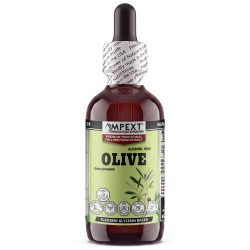
→ Read our full Olive Leaf article — the leaf, not the oil
A Note on the Evidence
The strongest claim in this article is also the least exciting: replacing saturated fat with unsaturated fat is supported by randomized evidence, and all five oils do that. Beyond it, extra virgin olive oil has the deepest outcome data — including the atrial fibrillation result, which is the single most striking finding here and also the one most easily overstated, since it describes a whole dietary pattern in a primary-prevention population. The polyphenol work is solid but narrower than advertising implies, and the avocado and flaxseed findings both come with design details that change what they actually mean. These are foods, not treatments, and we have not implied otherwise.
References
- Reduction in saturated fat intake for cardiovascular disease. Cochrane Database of Systematic Reviews, 2020.
- Primary Prevention of Cardiovascular Disease with a Mediterranean Diet Supplemented with Extra-Virgin Olive Oil or Nuts. New England Journal of Medicine, 2018 (corrected and republished).
- The effect of polyphenols in olive oil on heart disease risk factors: a randomized trial. Annals of Internal Medicine, 2006.
- Potent antihypertensive action of dietary flaxseed in hypertensive patients. Hypertension, 2013.
- Effect of a moderate fat diet with and without avocados on lipoprotein particle number, size and subclasses in overweight and obese adults: a randomized, controlled trial. Journal of the American Heart Association, 2015.
- Extravirgin olive oil consumption reduces risk of atrial fibrillation: the PREDIMED (Prevención con Dieta Mediterránea) trial. Circulation, 2014.
- Effect of Long-Term Marine ɷ-3 Fatty Acids Supplementation on the Risk of Atrial Fibrillation in Randomized Controlled Trials of Cardiovascular Outcomes: A Systematic Review and Meta-Analysis. Circulation, 2021.
These statements have not been evaluated by the Food and Drug Administration. This article is provided for educational purposes only and is not medical advice. Dietary oils are foods, not treatments for any disease. If you have a heart condition, high blood pressure or a rhythm disorder, or take prescription medication — particularly anticoagulants — talk with your doctor before making significant changes to your diet.
Related Products
Leave a comment