
















Turmeric (Curcuma longa) is the golden rhizome behind curry, mustard's colour and one of the oldest continuous traditions in botanical history — and the source of curcumin, probably the most studied plant compound of our time. A cousin of ginger, it has been used in India for thousands of years as a spice, a dye and a traditional remedy. This article covers what the plant is, what its rhizome contains, why curcumin is famously hard for the body to absorb, what controlled studies in healthy and active adults have found, and how to use turmeric sensibly.
Botanical Characteristics
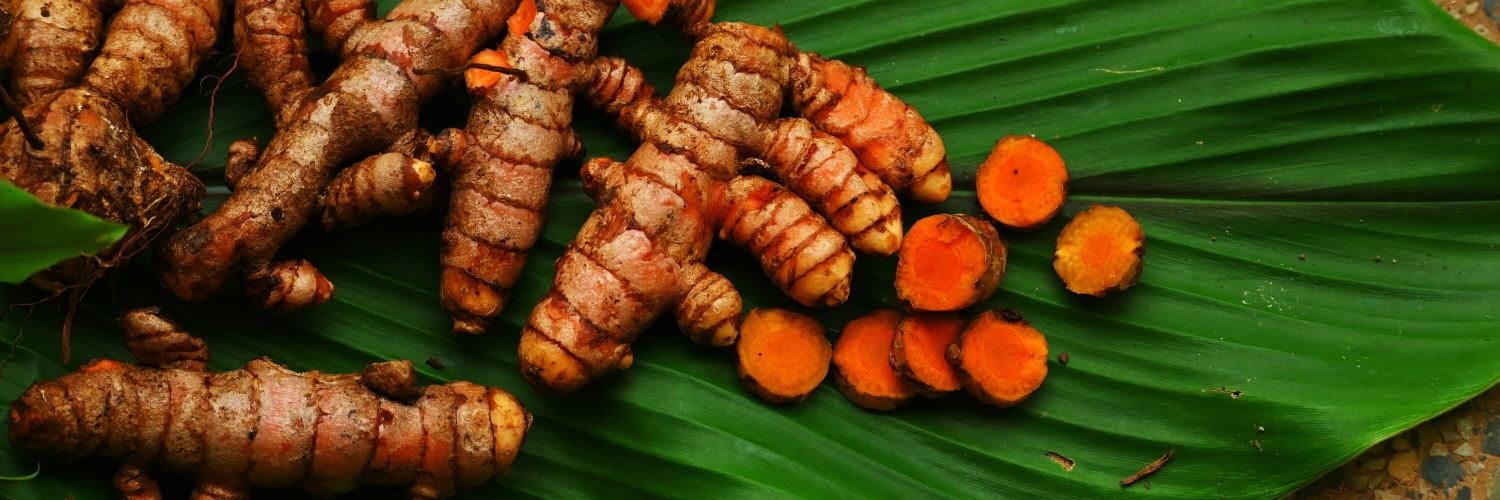
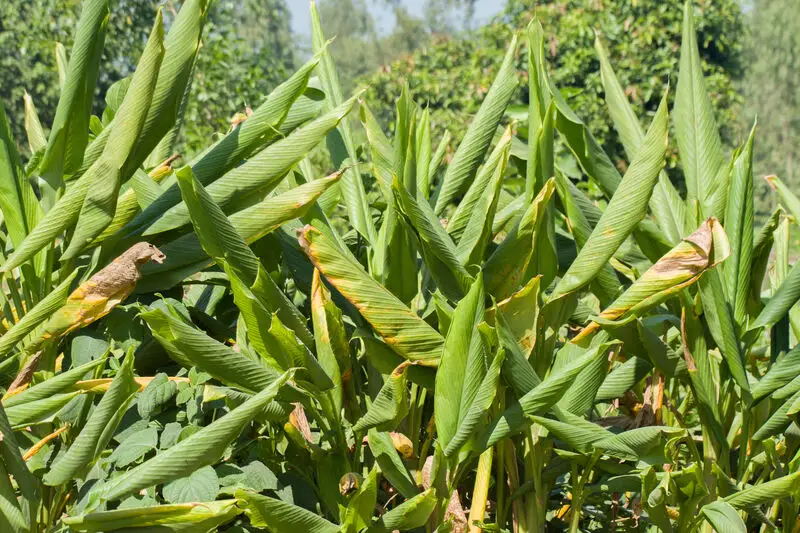
Turmeric is a perennial herb of the ginger family (Zingiberaceae), native to India and Southeast Asia.1 Above ground it grows long, broad, aromatic leaves up to a metre tall and a dense spike of pale flowers; below ground it spreads a network of thick, finger-like rhizomes — underground stems with a thin brown skin and a vivid orange-yellow interior. The rhizome is the part used: it is lifted, boiled or steamed, dried and ground for the kitchen, or, in our case, dried and extracted whole.
Chemical Composition
Turmeric's colour comes from its curcuminoids: curcumin itself, plus demethoxycurcumin and bisdemethoxycurcumin. Curcumin makes up roughly 3–6% of the rhizome and typically about half to two-thirds of the curcuminoid mix.1 The second, less famous half of turmeric is aromatic: the rhizome carries around 5–6% essential oil, whose warm, peppery scent comes mainly from the turmerones — ar-turmerone, α-turmerone and β-turmerone.1 Curcumin has an important chemical character: it is almost insoluble in water but dissolves readily in ethanol, which is why ethanol is the preferred solvent for drawing curcumin out of the rhizome.2 A whole-rhizome tincture therefore carries both families together — curcuminoids and turmerones — in the proportions the plant made them.
Habitat
Turmeric needs warmth, humidity and plenty of rain, and is cultivated across tropical Asia, with India by far the largest producer and consumer. It is grown almost entirely from pieces of rhizome rather than from seed, and the crop is lifted when the leaves begin to yellow, some seven to ten months after planting. Our extract is made from certified organic dried turmeric rhizome.
Taste
Warm, earthy and gently bitter, with a peppery, slightly citrus-ginger aroma from the turmerones. As a cane-alcohol tincture it is bold and aromatic; a serving added to water or juice softens the alcohol and lets turmeric's warmth come through.
History of Use
Turmeric has been in continuous use in South Asia for nearly four thousand years — as a culinary spice, as a dye for cloth (its colour is the "Indian saffron" of old trade), in religious ceremonies, and within Ayurveda and other traditional systems as a warming, balancing herb for digestion, skin and comfortable joints.3 Arab traders carried it west, and it became a familiar spice in Europe in the Middle Ages. Curcumin was first isolated from the rhizome in 1815, and since the late twentieth century turmeric has become one of the most researched botanicals in the world.2
Turmeric (Curcuma longa) TRUE™ Tincture — Traditional Uses:
- Supports Joint Comfort and Mobility*
- Supports a Healthy Inflammatory Response*
- Supports Recovery After Exercise*
- Antioxidant Curcuminoids and Aromatic Turmerones
- Supports Healthy Digestion*
Made with organic cane alcohol from certified organic whole rhizome. If you take blood thinners or have a gallbladder condition, please read the note below first.
The Curcumin Absorption Question
Curcumin's great strength in the laboratory is also its best-known weakness in the body: on its own it is poorly absorbed, rapidly broken down and quickly eliminated. A classic study made the point vividly — after healthy volunteers took 2 g of pure curcumin, levels in their blood were very low or undetectable; adding 20 mg of piperine, the pungent compound of black pepper, raised curcumin's bioavailability about twentyfold by slowing its breakdown in the gut wall and liver.4 That finding launched a whole industry of "high-absorption" curcumin formulas. A whole-rhizome tincture takes a different, more traditional approach: modest amounts of the full plant — curcuminoids, turmerones and the rest — taken regularly as part of a routine, the way turmeric has always been used in food.
Turmeric, Joint Comfort and Exercise Recovery
This is where turmeric's human research is most relevant to healthy, active people. A 2021 meta-analysis of randomized controlled trials found that curcumin supplementation after strenuous exercise reduced muscle soreness and lowered creatine kinase, a marker of exercise-related muscle stress, with consistent results across training levels and types of exercise.5 In a separate randomized, placebo-controlled trial, ninety healthy adults with knee discomfort after strenuous exercise took a turmeric extract or placebo for twelve weeks; the turmeric groups reported less discomfort from the first week and had better knee range of motion than the placebo group.6 These trials used standardised turmeric preparations rather than a tincture, so they tell us about the plant rather than about a particular dose — but they line up well with turmeric's traditional role in supporting comfortable joints and everyday ease of movement.
Turmeric and Antioxidant Support
Curcuminoids are potent antioxidants in the test tube, and one placebo-controlled study looked for that effect in healthy middle-aged adults. After four weeks of a low daily amount of curcumin (80 mg), the curcumin group showed higher radical-scavenging capacity in saliva and higher activity of catalase, one of the body's own antioxidant enzymes, in the blood, along with lower triglycerides — healthy changes within the normal range in people who were already well.7
Turmeric and Digestion
Turmeric's oldest everyday role is in the kitchen and at the end of a meal. The European Medicines Agency's herbal committee recognises turmeric rhizome as a traditional herbal medicine for the relief of mild digestive discomfort such as feelings of fullness, slow digestion and flatulence, on the basis of long-standing use — and its list of traditional preparations includes alcohol tinctures of the rhizome.8 Part of the mechanism is well established: curcumin stimulates the gallbladder to contract and release bile, which helps the digestion of fats; in healthy volunteers, small amounts of curcumin measurably reduced gallbladder volume within two hours.9
A Note on the Evidence
Turmeric has an unusually large body of research, but most human trials use concentrated, standardised curcumin or turmeric extracts in capsule form, not a tincture of the whole rhizome. What the research supports is the plant's place in a healthy routine — for comfortable joints, recovery after exercise, antioxidant support and digestion — rather than any claim about a single dose. We make no medical claims for it and offer it the way it has been used for millennia: steadily, in modest amounts, as part of everyday life.
Why a Tincture for Turmeric?
Because curcumin dissolves poorly in water but readily in ethanol, turmeric is one botanical for which an alcohol extract makes particular sense.2 Our TRUE™ Tincture is made from certified organic dried rhizome in organic cane alcohol and water (45–55% alcohol by volume), with ultrasound-assisted, temperature-controlled maceration — never from a pre-made curcumin powder — so both the curcuminoids and the heat-sensitive aromatic turmerones are carried into the finished extract.
→ Read our Tincture vs Glycerite comparison
Using Turmeric Sensibly
Turmeric is one of the world's most widely eaten spices, and for most healthy adults a tincture in drops is a familiar, comfortable way to use it. Three groups should check first. Because turmeric encourages bile flow, the EMA advises against it for anyone with gallstones, a blocked bile duct, or a liver or gallbladder condition.8 If you take blood-thinning medication, ask your doctor first, as an increased clotting time has been reported in a person combining turmeric with an anticoagulant.10 And rare liver reactions have been reported with turmeric supplements; in a regional review from Italy, every case involved a high-dose, high-absorption curcumin product rather than turmeric as food or a traditional preparation, and most people recovered once they stopped taking it.11 If none of this applies to you, there is nothing here to worry about — just keep to the label serving and stop two weeks before any planned surgery.
How to Use Turmeric TRUE™ Tincture
- Serving: About 1 mL — one full squeeze of the dropper bulb — up to three times per day.
- How to take it: Mix into water, juice or any drink you enjoy, ideally with or after a meal.
- Shake first: Cloudiness and sediment are natural signs of a full-spectrum extract.
- Consistency: The research used daily intake over weeks; a steady routine suits turmeric better than occasional servings.
- Storage: Keep tightly capped in a cool, dry, dark place away from direct sunlight.
Contraindications
- Gallbladder and liver: Not recommended with gallstones, bile-duct obstruction, or liver or gallbladder conditions.
- Blood thinners and surgery: Speak with your doctor first if you take anticoagulant or antiplatelet medication; stop two weeks before scheduled surgery.
- Pregnancy and breastfeeding: Not recommended in supplement form.
- Children: Not for use by anyone under 18 without professional advice.
- Alcohol: This tincture contains 45–55% alcohol by volume; choose another option if you avoid alcohol.
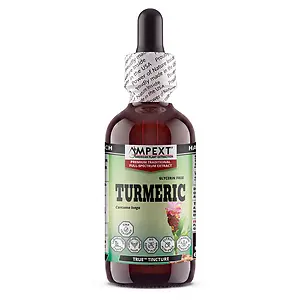
FROM THE AMPEXT RANGE
Turmeric TRUE™ Tincture (Curcuma longa)
Organic cane alcohol · certified organic whole rhizome · ultrasound-assisted extraction · glycerin-free
References
- Biological activities of curcuminoids, other biomolecules from turmeric and their derivatives - A review. Journal of Traditional and Complementary Medicine, 2017.
- The chemistry of curcumin: from extraction to therapeutic agent. Molecules, 2014.
- Turmeric, the Golden Spice: From Traditional Medicine to Modern Medicine. Herbal Medicine: Biomolecular and Clinical Aspects, 2011.
- Influence of piperine on the pharmacokinetics of curcumin in animals and human volunteers. Planta Medica, 1998.
- The effect of curcumin supplementation on recovery following exercise-induced muscle damage and delayed-onset muscle soreness: A systematic review and meta-analysis of randomized controlled trials. Phytotherapy Research, 2021.
- Effect of Turmacin supplementation on joint discomfort and functional outcome among healthy participants - A randomized placebo-controlled trial. Complementary Therapies in Medicine, 2020.
- Diverse effects of a low dose supplement of lipidated curcumin in healthy middle aged people. Nutrition Journal, 2012.
- European Union herbal monograph on Curcuma longa L., rhizoma (Revision 1). European Medicines Agency, Committee on Herbal Medicinal Products, 2018.
- Effect of different curcumin dosages on human gall bladder. Asia Pacific Journal of Clinical Nutrition, 2002.
- Probable interaction between an oral vitamin K antagonist and turmeric (Curcuma longa). Thérapie, 2014.
- Acute liver injury following turmeric use in Tuscany: An analysis of the Italian Phytovigilance database and systematic review of case reports. British Journal of Clinical Pharmacology, 2021.
These statements have not been evaluated by the Food and Drug Administration. This product is not intended to diagnose, treat, cure or prevent any disease. The information in this article is provided for educational purposes only and is not medical advice; consult a qualified healthcare provider before starting any new supplement, especially if you are pregnant, nursing, taking medication, or have an underlying health condition.
Related Products
Leave a comment