
















1:3, 1:4, even 1:2 — extract ratios have become a selling point, and the smaller the second number, the stronger a tincture looks on the shelf. It is an understandable shortcut: the ratio promises to tell you how much plant is in the bottle. But a ratio says nothing about how the extract was made, and some of the most impressive numbers cannot be reached by the traditional method a label implies. As a manufacturer that makes its extracts by macerating whole dried herbs, we want to explain what a ratio really measures, why plants of different density produce very different numbers, and what deserves your attention instead.
The 30-second version:
- A ratio compares dried herb to finished liquid: 1:5 means 1 part herb to 5 parts extract
- Dense roots can reach low ratios; light, airy leaves cannot — an honest leaf tincture may be 1:10 or even 1:20
- Very low ratios usually mean extra processing: vacuum concentration, or a dry or CO2 extract dissolved in liquid
- Color is not strength, and a smaller number is not automatically a better extract
- Judge an extract by how it was made, not by the number alone
What a Ratio Actually Measures
An extract ratio compares the amount of dried plant used with the amount of finished liquid obtained: the first number stands for the herb, the second for the extract. The European Medicines Agency’s labeling guideline gives a clear worked example — a valerian root tincture declared as 1 : 4.0–4.5 corresponds to 220–250 mg of dried root in each milliliter.1 Seen that way, a smaller second number does mean more herb behind every milliliter — on paper.
The traditional way of making a tincture, however, sets the proportion by volume, not by weight: the herb goes into the vessel, and the liquid is poured over it until the plant is well covered. In our experience that lands somewhere between 1:1 and 1:3 by volume, depending on the plant. Weigh the same batches, and the “ratio” swings from about 1:2 to 1:20 — simply because a cup of one dried herb weighs many times more than a cup of another. Same method, same care, wildly different numbers.
Why Heavy Roots and Airy Leaves Can’t Share a Number
Take a 1:3 label at its word: 333 grams of dried herb for every liter of finished extract. With a dense root, finely ground, that is achievable — the material packs tightly, and there is enough liquid to soak it and still press a good extract out. With the right root, careful maceration can go as far as 1:2.
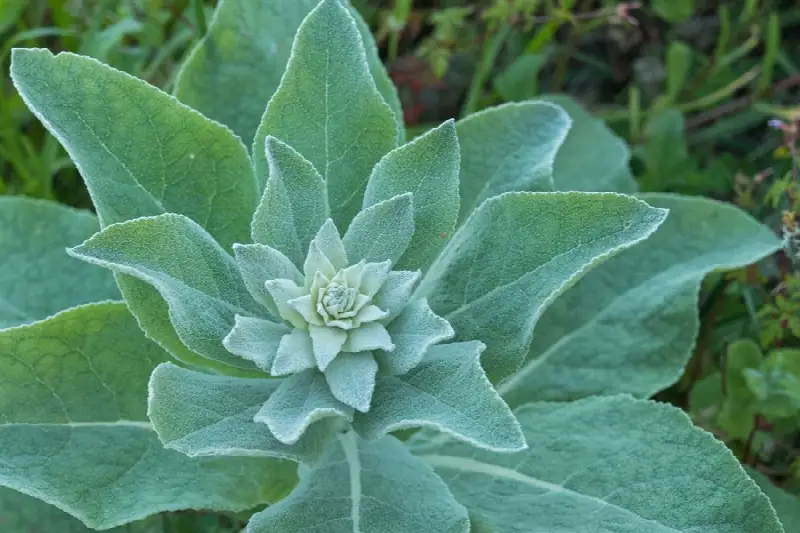
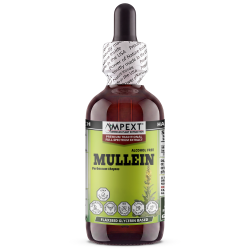
Now try the same with mullein. Dried mullein leaf is about as light and airy as herbs get: 333 grams of it is a heap many times larger than the liter of liquid meant to go over it. In our workshop the outcome is predictable — a liter of liquid does not even wet that much leaf through, let alone leave anything to press out. A classic mullein tincture made by honest maceration cannot realistically be more concentrated than about 1:10.
Official pharmacopoeias reflect the same physics. The Polish Pharmacopoeia’s peppermint tincture starts from 50 parts of powdered leaf macerated in 1,000 parts of alcohol and water — a 1:20 proportion.2 And when researchers optimized the maceration of chokeberry fruit for phenolic compounds, the optimized conditions used a solid-to-solvent ratio of 1:20.3 A 1:10 or 1:20 extract is not a weak extract. For many plants, it is simply what a genuine one looks like.
How Very Low Ratios Are Really Reached
If an honest maceration of an airy herb lands at 1:10, how can a bottle of the same plant be labeled 1:3? There are three common routes.
1. Concentrating a real extract. The genuine way to a truly concentrated liquid is to make a full extract first — by maceration or percolation — and then remove part of the liquid. Under vacuum, the liquid boils at a far lower temperature, so this can be done gently. It is also slow, energy-hungry and expensive, which is why a real concentrate costs noticeably more. And it has a trade-off of its own: as the alcohol evaporates, compounds that stayed dissolved only thanks to the alcohol fall out as sediment. The concentrate often comes out much lighter in color than the dark, rich tincture it started from — and many buyers read that as weakness. Color is not strength.
2. Dissolving a CO2 extract. Supercritical CO2 is an excellent solvent for a particular kind of compound: its low polarity makes it ideal for non-polar substances such as lipids and volatile oils, and a modifier has to be added to widen its reach.3 A liquid made by dissolving a CO2 extract can carry plenty of a plant’s oily fraction while missing much of its water-loving side — the opposite of a full-spectrum tincture.
3. Dissolving a dry extract. Dry extracts are most often made by spray drying,4 in which a liquid extract is sprayed as droplets into a chamber of hot air and the moisture is driven off.5 Powdered extracts are a legitimate form in their own right, for capsules and powders. But dissolving a powder back into liquid does not turn it into a traditional tincture: it has already been through the heat once, and heat-sensitive compounds are exactly why gentler, costlier methods such as freeze-drying exist.5 A dry extract made from ten parts of herb per part of powder, dissolved in a modest amount of liquid, can print an impressive 1:3 without the plant ever having been macerated at that proportion.
Beyond these routes, it is worth remembering that a ratio on a label is a claim most buyers have no way to check.
Better Extraction, Not a Better Number
There are genuine ways to get more out of a plant, and none of them involve rewriting the label. Maceration is simple and gentle — slow and not the most efficient method, but well suited to heat-sensitive compounds.3 Percolation is more efficient, because fresh solvent keeps replacing the saturated liquid as it flows through the herb.3 And ultrasound-assisted extraction has earned a strong reputation: the cavitation it creates in the liquid speeds up dissolution and diffusion, improves extraction efficiency and lets the work be done at lower temperatures and in less time — which also makes it suitable for heat-sensitive compounds.3
That is the direction worth chasing: deep but gentle extraction that preserves the activity of what the plant contains. A carefully made 1:10 extract of a light herb can give a far more complete picture of the plant than a 1:3 liquid reconstituted from a dry or CO2 extract. A genuine 1:10 extract may simply call for a larger serving than a 1:3 one — and that is a fair trade for getting the whole plant rather than a number.
What to Ask Instead of “What’s the Ratio?”
- What went into the bottle? Whole dried root, leaf or bark — or a pre-made powder or CO2 extract?
- What was the solvent? Alcohol and water or glycerin and water — each draws out a different profile, as we explain in Tincture or Glycerite?
- How was it extracted? Maceration, percolation, with or without gentle assistance such as ultrasound?
- Was it concentrated, and how? A genuine concentrate involves an extra, careful step — and is priced accordingly.
- Does the number make sense for the plant? A low ratio for a dense root is plausible; the same number for a feather-light leaf deserves a question.
For the practical side — how much to take, when, and how to store your extracts — see our guide How to Take Liquid Herbal Extracts.
Browse Tinctures Browse Glycerites
References
- Guideline on declaration of herbal substances and herbal preparations in herbal medicinal products/traditional herbal medicinal products (EMA/HMPC/CHMP/CVMP/287539/2005 Rev.1). European Medicines Agency, 2010.
- Analysis of Polyphenolic Composition of a Herbal Medicinal Product—Peppermint Tincture. Molecules, 2019.
- Techniques for extraction and isolation of natural products: a comprehensive review. Chinese Medicine, 2018.
- A Review on Influence of Spray Drying Process Parameters on the Production of Medicinal Plant Powders. Current Drug Discovery Technologies, 2019.
- Advances in Spray-Drying and Freeze-Drying Technologies for the Microencapsulation of Instant Tea and Herbal Powders: The Role of Wall Materials. Foods, 2025.
These statements have not been evaluated by the Food and Drug Administration. These products are not intended to diagnose, treat, cure or prevent any disease. The information in this article is provided for educational purposes only and is not medical advice; consult a qualified healthcare provider before starting any new supplement, especially if you are pregnant, nursing, taking medication, or have an underlying health condition.
Related Products
Leave a comment