















Liquid extracts are the simplest supplements to take — and the easiest to take slightly wrong. A dropper is not a teaspoon, a "drop" is not a unit of measure, and the popular hot-tea trick for tinctures does far less than most people think. This guide walks through the four short steps printed on every AMPEXT liquid extract, explains the reasoning behind each one, and answers the questions we hear most often: how much is a serving, when to take it, what to mix it with, how strong it is, and how to keep a bottle at its best.
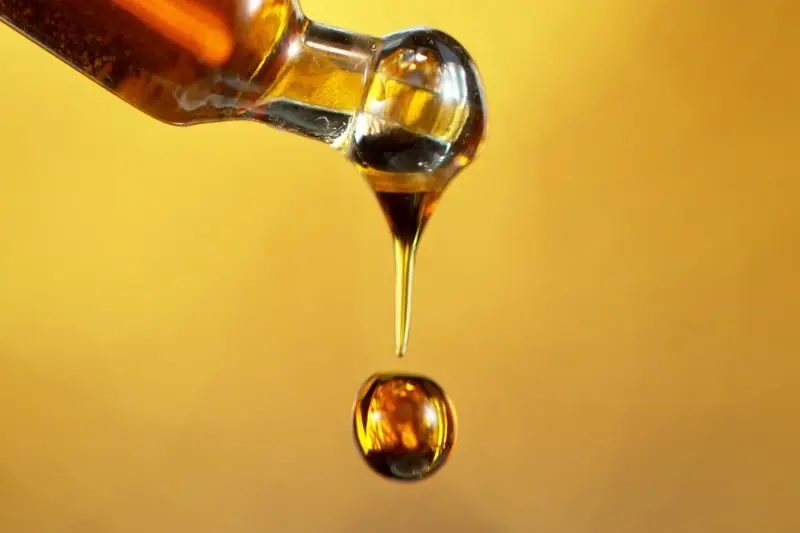
The 30-second version:
- Shake the bottle first — cloudiness and sediment are normal
- One full squeeze of the dropper = about 1 mL = one serving
- Mix into water, juice or tea, up to 3 times a day, ideally with or after a meal
- Store tightly capped, cool and dark — and keep the dropper off your tongue
- Avoiding alcohol completely? Choose a glycerite
Step 1: Shake Before Every Serving
A full-spectrum extract is made from the whole plant part rather than from a purified isolate, so it carries everything the plant material released into the liquid — including fine particles and compounds that slowly settle to the bottom of the bottle. Cloudiness and a little sediment are therefore the signature of a whole-herb extract, not a sign that something is wrong. A few firm shakes before each serving put everything back into suspension, so every milliliter carries the same mix as the one before it.
What is not normal: a fuzzy film on the surface, an unusual smell, or a tamper-evident seal that was already broken when your bottle arrived. In any of those cases, don’t use the extract — message us in the live chat and we will help.
Step 2: Measure — What a Serving Actually Is
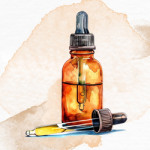
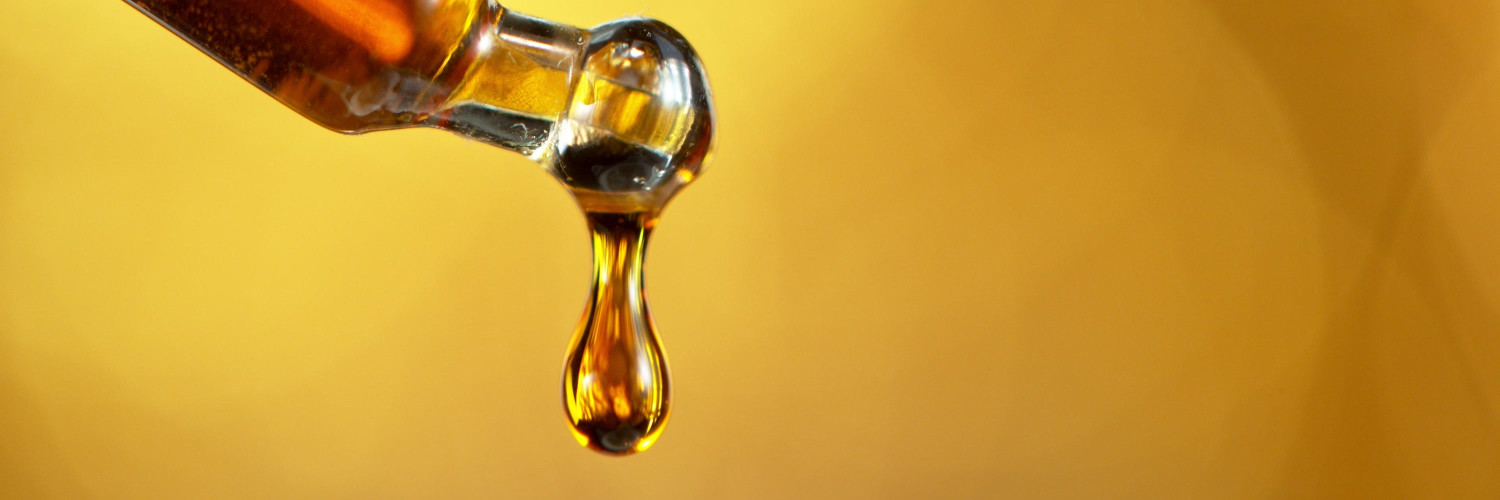
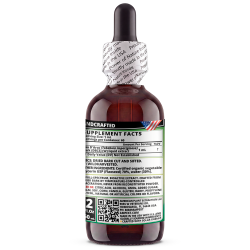
On every AMPEXT liquid extract, one serving is 1 mL — one full squeeze of the dropper bulb. Squeeze the bulb while the dropper sits in the bottle, release it, and use what the pipette draws up.
Why not simply count drops? Because a drop is not a fixed amount. A review of dropper bottles — written about eye drops, but the same factors apply to any dropper — found that drops range from roughly 25 to 70 microliters, a nearly threefold spread, depending on the design of the dropper tip, the properties of the liquid itself and the way the bottle is held.1 Any drop count you see on a label is an approximation; the full-squeeze measure is the one to go by.
If you like precision, a 1 mL oral syringe from any pharmacy takes the guesswork out completely.
Step 3: Mix It Into a Drink
Our directions suggest adding your serving to water, juice or any drink you enjoy. It is the easiest way to take any extract: a drink softens the natural bite of alcohol-based tinctures and the earthy bitterness of roots and barks, and it turns the habit into something you barely notice. A small glass works better than a large bottle — the goal is to finish the whole serving, not to sip it through the afternoon.
Some people prefer their extract straight from the dropper, or hold it under the tongue for a moment before swallowing. That is a matter of taste: glycerites are naturally sweet and easy to take neat, while tinctures are sharp and warming. If you take drops directly, empty the dropper into your mouth without touching it to your lips or tongue — the reason is in the storage section below.
Step 4: Pick Your Moment and Keep a Rhythm
Our labels say up to three servings a day, ideally with or after a meal. Food is simply the gentler companion: many people find botanical extracts — especially bitter roots and barks — sit more comfortably on a stomach that is not empty. Beyond that, the best time is the one you will remember: with breakfast, with dinner, or both.
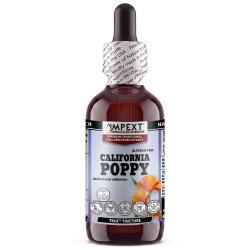
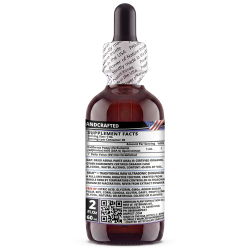
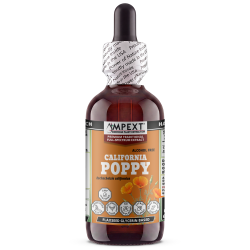
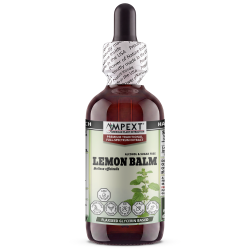
Some extracts have a natural moment of their own. Botanicals traditionally used for calm, such as California poppy and lemon balm, often find their place in the evening — our California poppy label notes that many people prefer a serving 30–60 minutes before bedtime. Whatever you take, rhythm matters more than the clock: botanical support works best as part of a steady daily routine, so give a new extract a few weeks of regular use before you judge it.
Does Hot Tea Burn Off the Alcohol?
It is one of the most repeated tips in herbalism: stir your tincture into hot water and the alcohol “evaporates.” The measurements say otherwise. In the USDA’s reference table on how food preparation affects nutrients, an alcoholic ingredient stirred into hot liquid still keeps about 85% of its alcohol.2 A warm cup of tea removes only a small share.
The better news is that there is very little to remove in the first place. Our TRUE™ tinctures contain 45–55% alcohol by volume, so a 1 mL serving holds roughly 0.35–0.43 g of alcohol. A standard drink in the United States contains about 14 g.3 One serving of tincture is therefore around 2.5–3% of a single standard drink — trivial for most adults, but not zero.
“Not zero” still matters to anyone who avoids alcohol completely, for personal, religious or health reasons. For them, the answer is not a hotter cup of tea but a different base: our alcohol-free glycerites are made with certified organic flaxseed glycerin and contain no alcohol at all. Our guide Tincture or Glycerite? explains how the two forms compare.
How Strong Is It? A Word on Extract Ratios
“How much herb is in one milliliter?” is one of the questions customers ask us most, and many labels answer it with a ratio such as 1:3 or 1:4 — dried herb against finished liquid. On paper, a smaller second number means more plant behind every milliliter. In practice, a ratio says nothing about how the extract was made. A light, airy leaf simply cannot be macerated at 1:3 — at that proportion the dry herb soaks up the liquid before there is anything left to extract into — so an honest traditional extract of such a plant may well be 1:10, and that is not a weakness. A beautiful number on a label is not a guarantee; how carefully the plant was extracted matters more. We explain why, with examples, in Extract Ratios Explained.
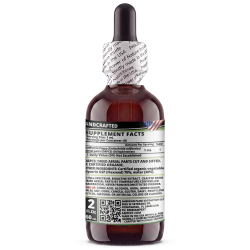
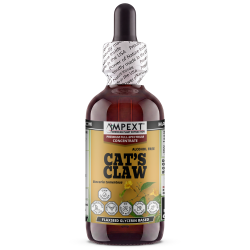
Does it come in different strengths? Most AMPEXT extracts are made in one strength, and your everyday lever is simply the number of servings within the label’s range. The exception is our Cat’s Claw Concentrate: after extraction it is gently concentrated at low temperature, so each milliliter carries more of the bark. For details about a particular extract, our team answers in the live chat on this page.
How Long Does a Bottle Last?
With a 1 mL serving, the arithmetic is easy — one fluid ounce holds just under 30 mL:
- 2 fl oz — about 60 servings: two months at one serving a day, about three weeks at three
- 4 fl oz — about 120 servings: four months at one a day, about six weeks at three
- 16 fl oz — about 470 servings: around five months at three a day
- 32 fl oz — about 950 servings: around ten months at three a day
The larger sizes work best as a refill: keep the big bottle tightly capped in a cool, dark cupboard and top up a clean amber 2 oz dropper bottle as you go. The reserve stays closed most of the time, and the liquid you handle every day lives in a small bottle.
Storage, Shelf Life and Travel
Every AMPEXT label says the same thing for a reason: store tightly capped in a cool, dark place, away from direct sunlight. Heat and light slowly wear down delicate plant compounds, and the amber glass of the bottle is the first line of defense against light — so keep the extract in amber glass rather than moving it into a clear container. A closed kitchen cupboard away from the stove is ideal; a sunny windowsill or a hot car is not.
Keep the dropper clean, too. When the glass tip touches your lips or tongue, it carries saliva — and the microbes in it — back into the bottle. Dispense into a drink, or empty the dropper into your mouth without contact, and replace the cap right away. Alcohol is a natural preservative, which is why our tinctures need no added preservatives; our glycerites contain no alcohol, so with them these simple habits are worth keeping especially faithfully.
On the road, a 2 fl oz bottle is well under the TSA’s limit of 3.4 oz (100 mL) per container for liquids in carry-on bags, so it fits in your quart-size liquids bag;4 larger bottles belong in checked luggage. Glass travels best wrapped in a sock or a zip bag.
Who Should Check First
A few situations call for a quick conversation with your healthcare provider before you start any botanical extract: if you are pregnant, nursing or planning a pregnancy, if you take prescription medication, if you have a health condition, or if you have surgery coming up. Some of our extracts are not for use during pregnancy, a few call for extra care alongside medicines such as blood thinners, and our Cat’s Claw label asks you to stop two weeks before surgery — so read the warnings on the bottle you choose, and ask a physician before giving any extract to someone under 18.
If none of that applies to you, there is nothing more to worry about: follow the directions on the label, start with one serving a day if you like to ease in, and build your routine from there.
Browse Tinctures Browse Glycerites
References
- Determinants of eye drop size. Survey of Ophthalmology, 2004.
- USDA Table of Nutrient Retention Factors, Release 6. U.S. Department of Agriculture, 2007.
- What Is A Standard Drink? NIAAA, National Institutes of Health.
- Liquids, Aerosols, and Gels Rule. Transportation Security Administration.
These statements have not been evaluated by the Food and Drug Administration. These products are not intended to diagnose, treat, cure or prevent any disease. The information in this article is provided for educational purposes only and is not medical advice; consult a qualified healthcare provider before starting any new supplement, especially if you are pregnant, nursing, taking medication, or have an underlying health condition.
Related Products
Leave a comment